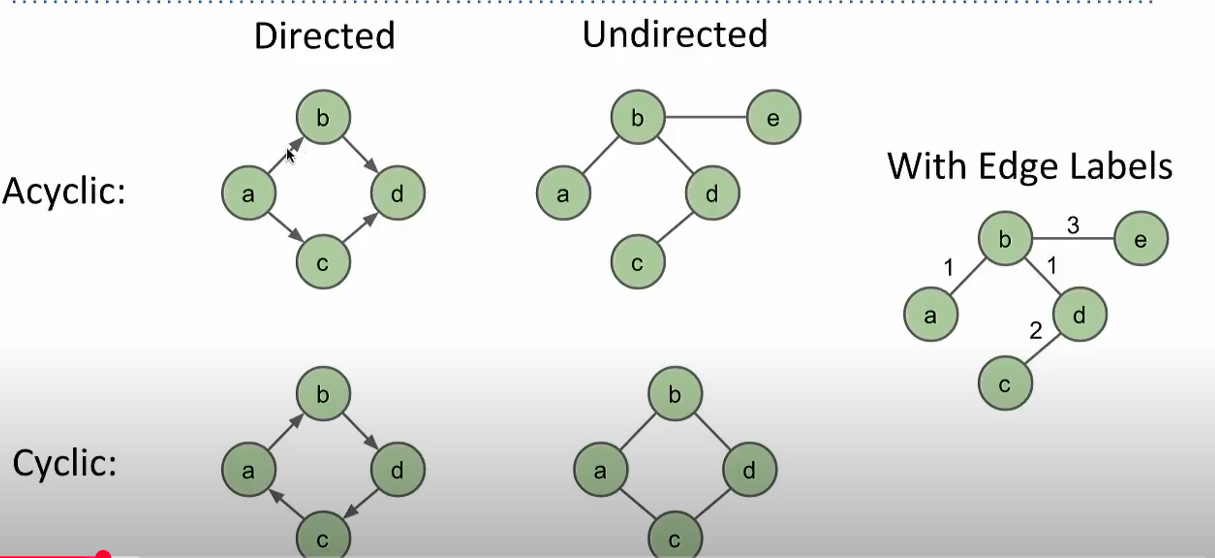
Types
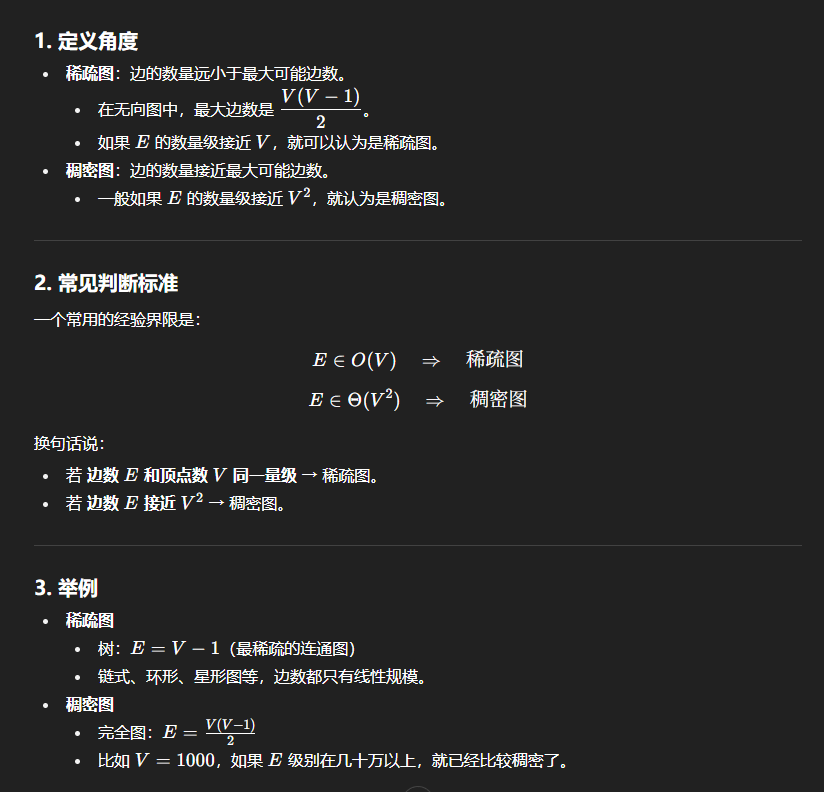
Dense and sparse:

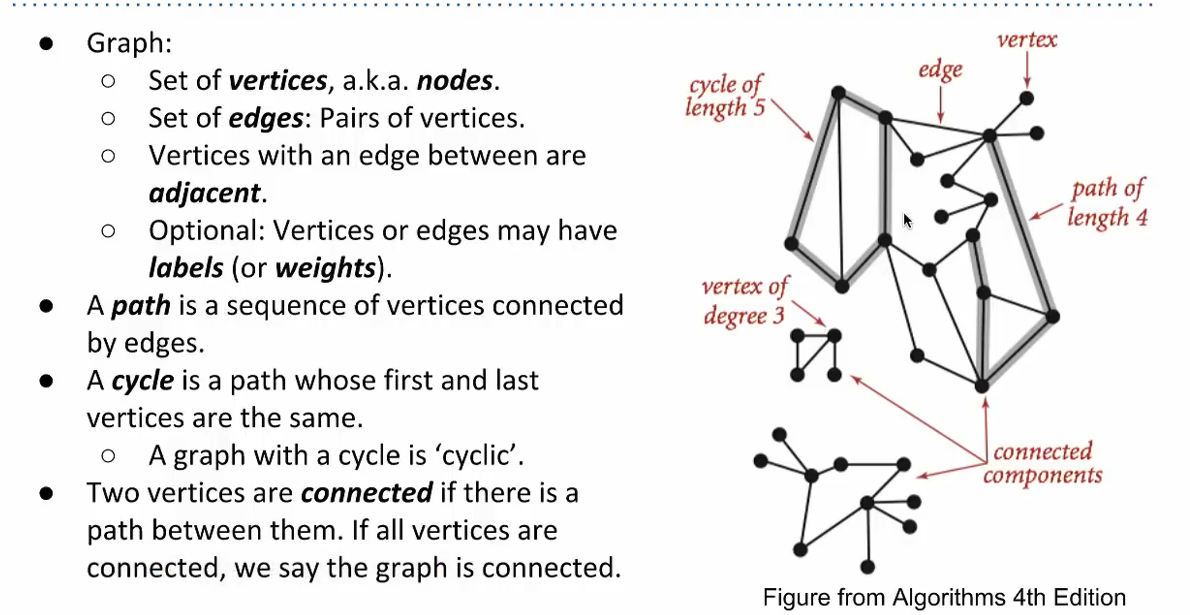
Terminology
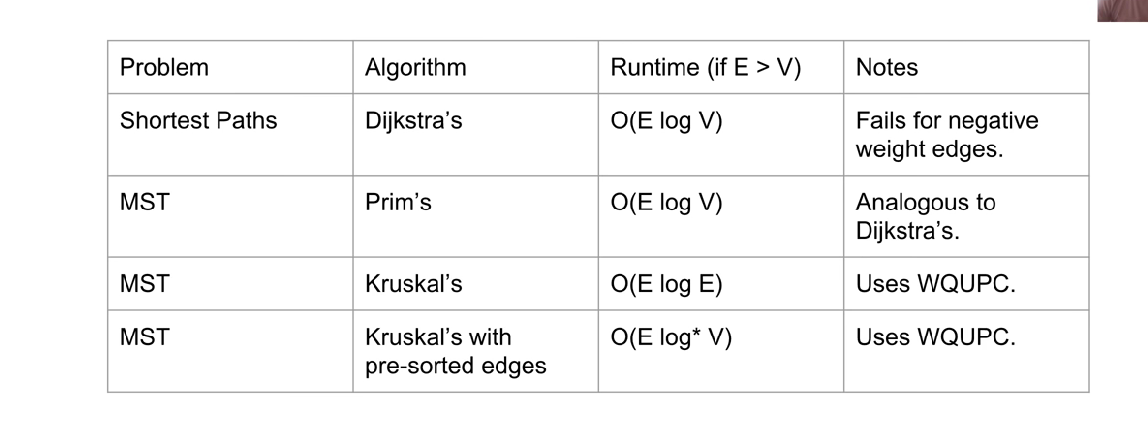
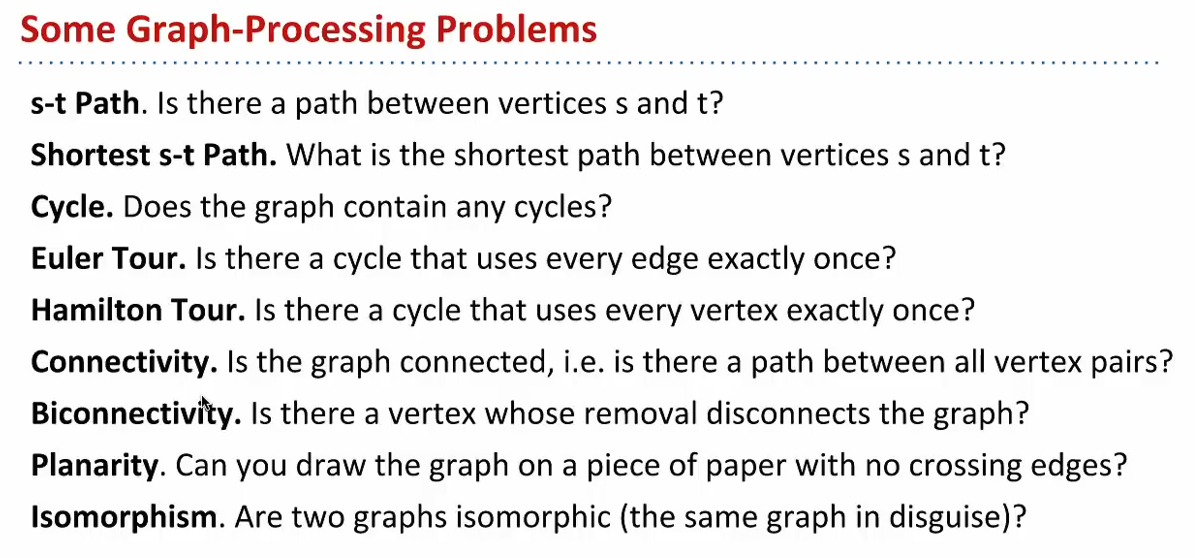
Problems
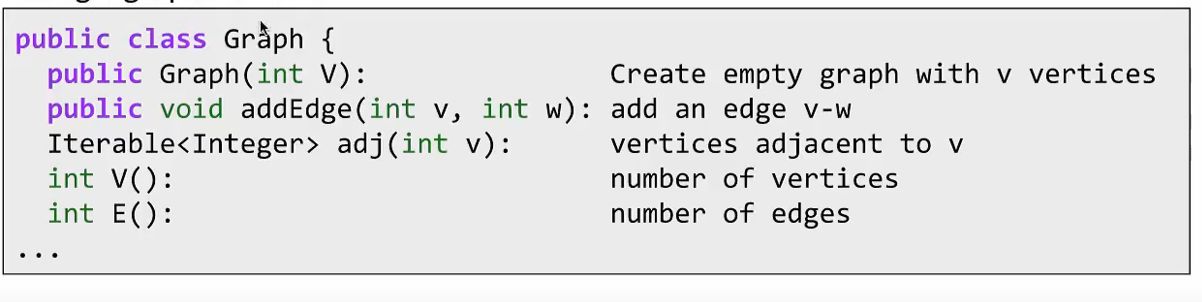
API
Representation
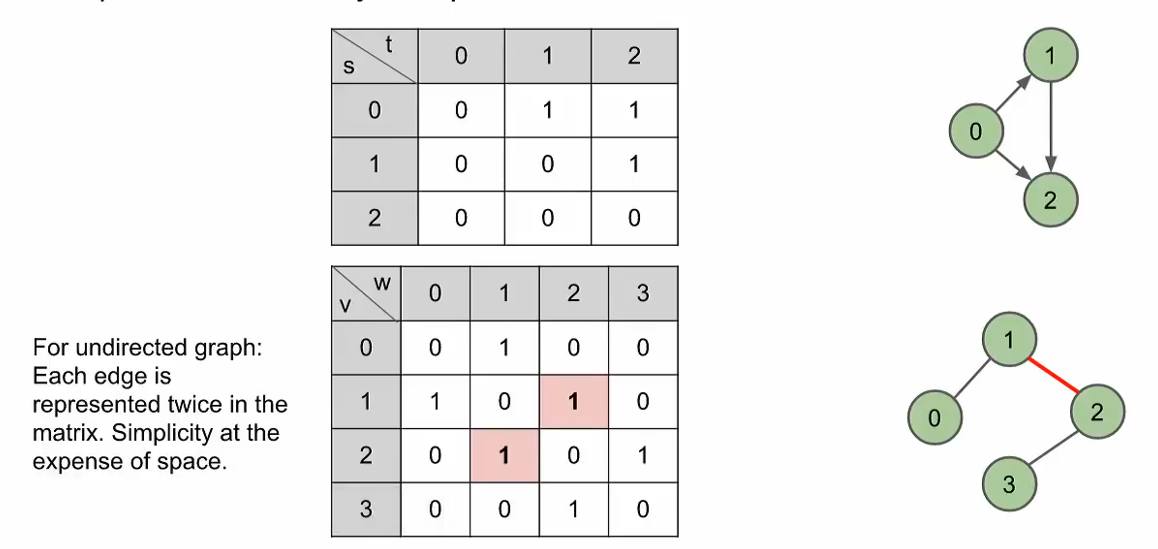
Adjacency Matrix
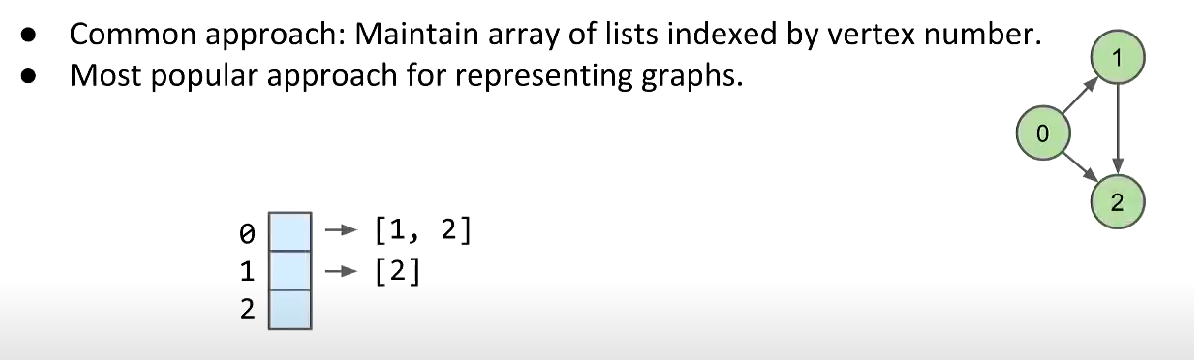
Adjacency List
Runtime
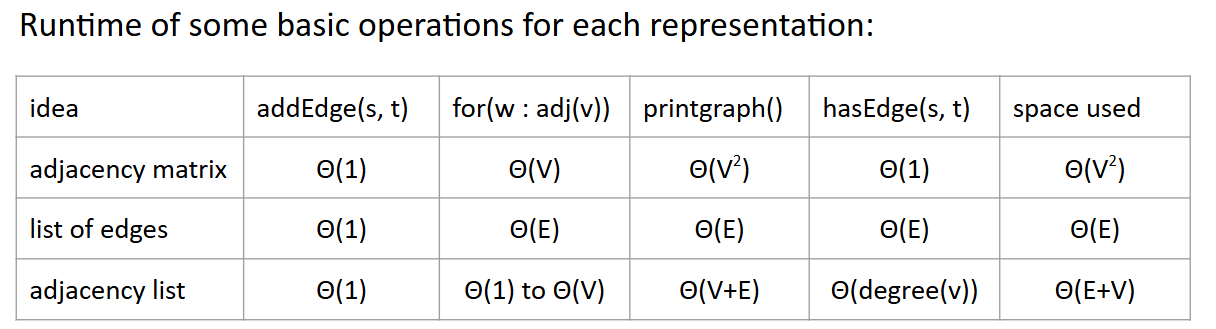 (In fact, the runtime of
 for(w : adj(v)) in adjacency list is theta(E))
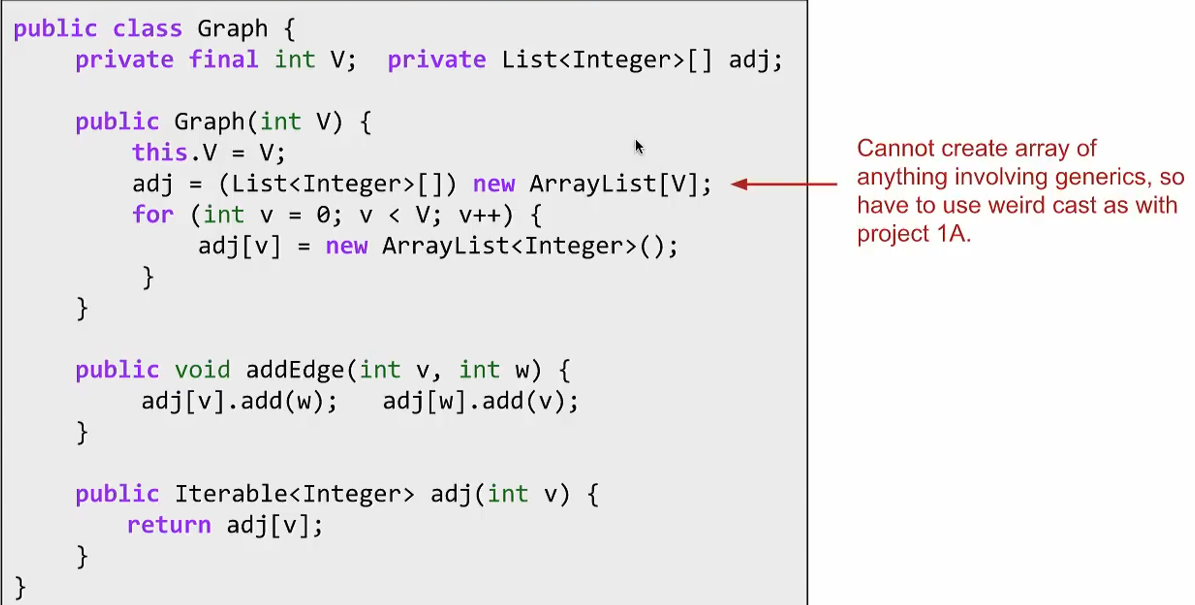
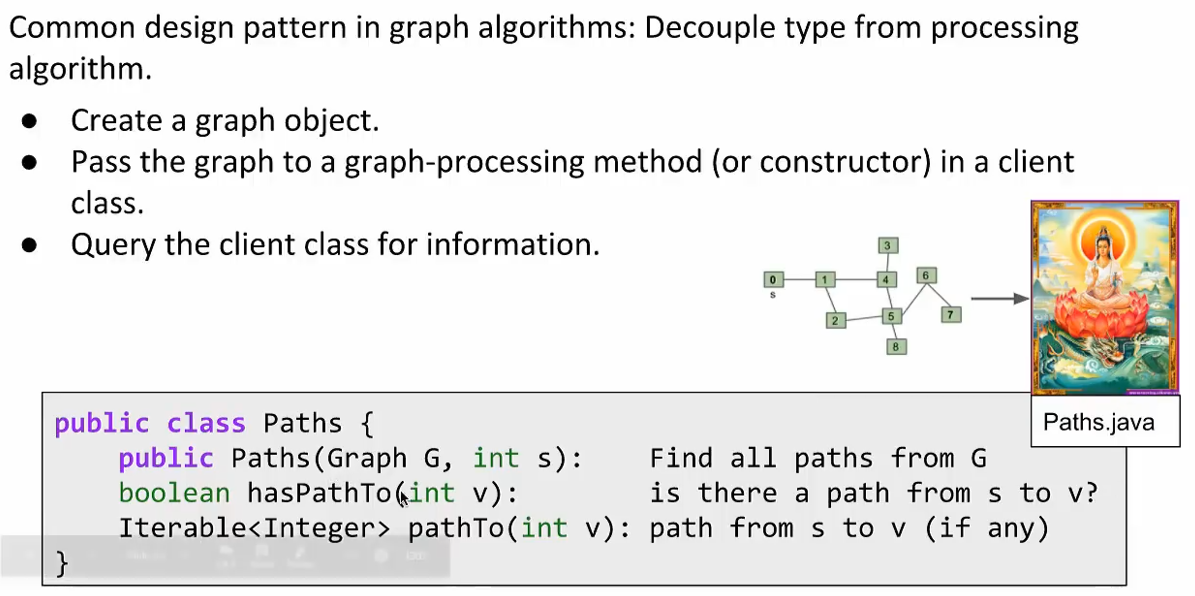
Implementation
Traversal
Kinds
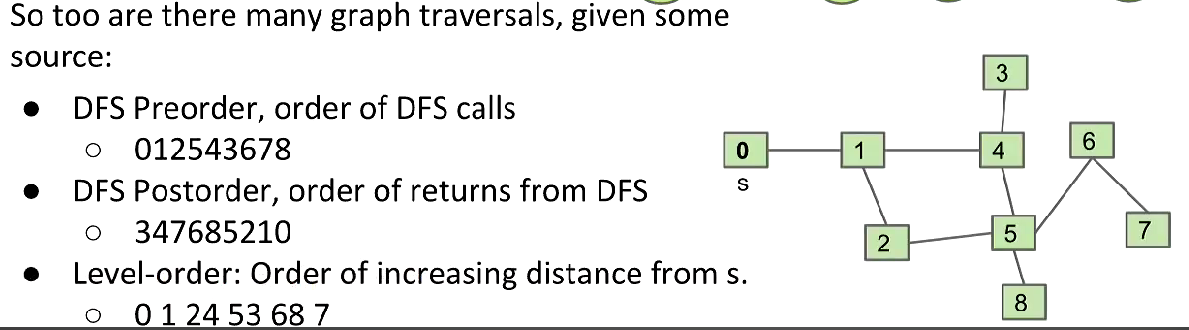
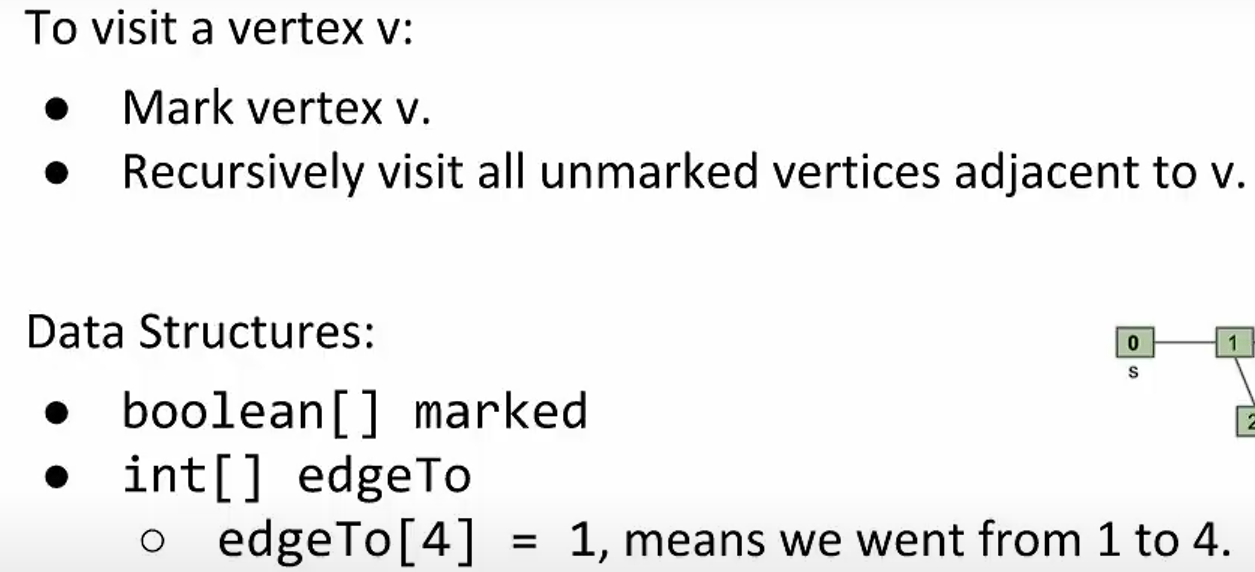
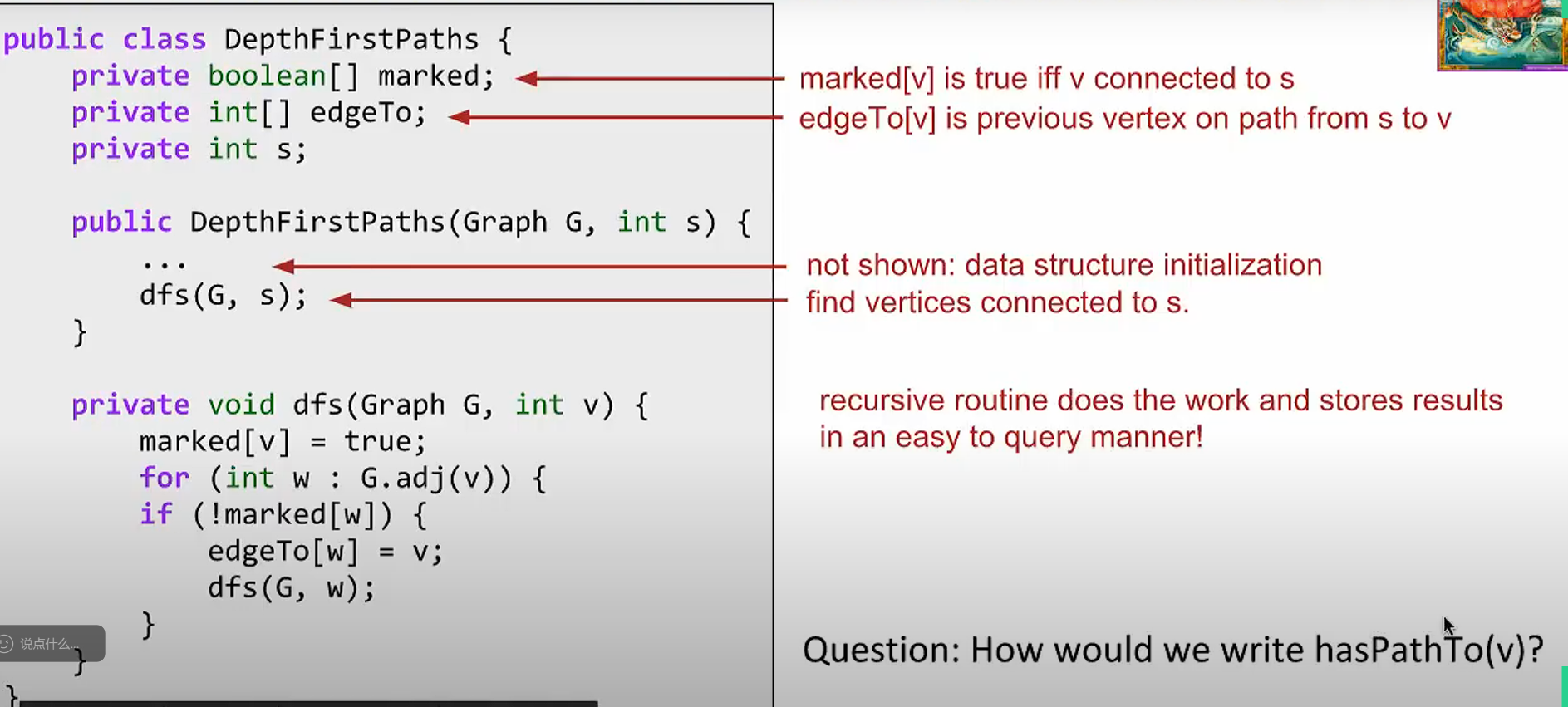
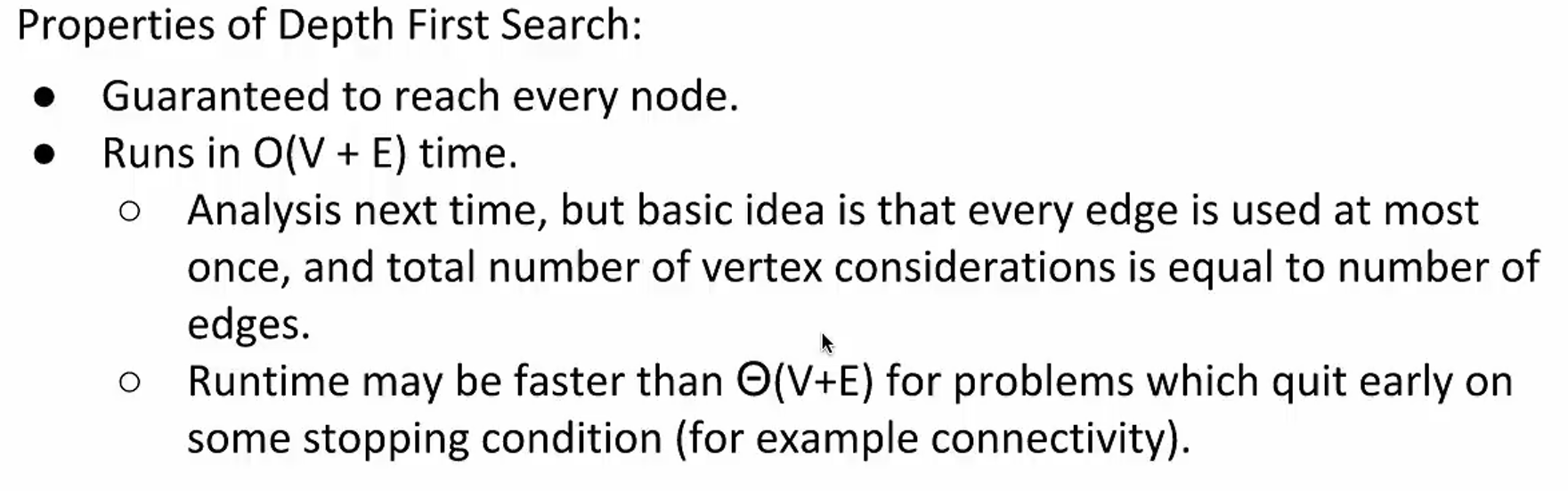
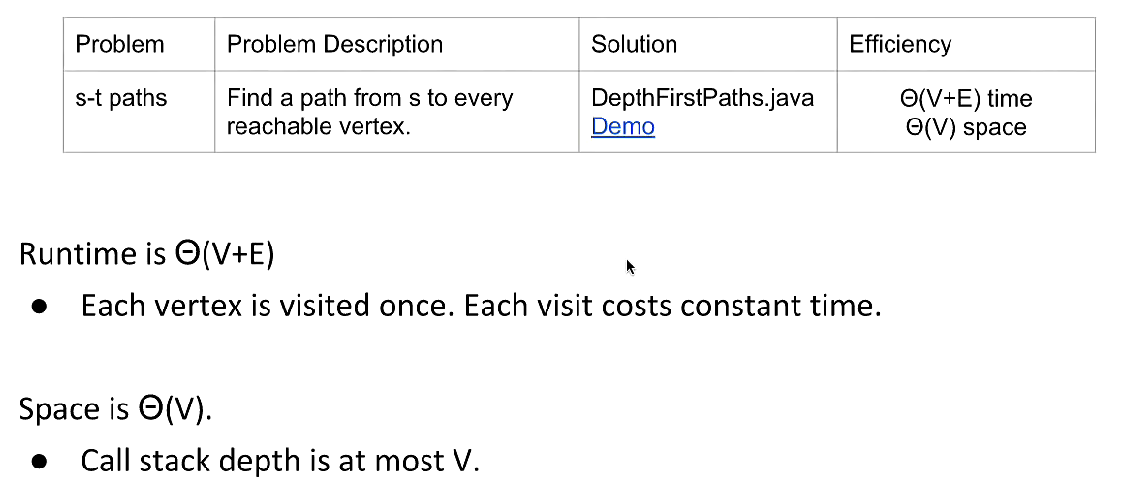
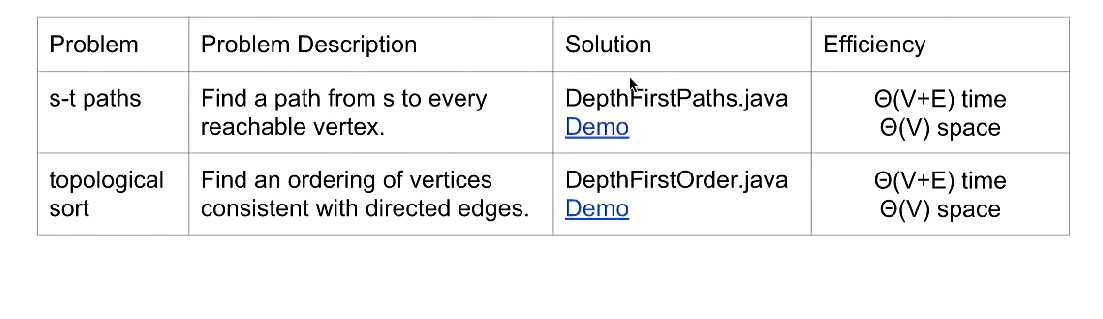
Depth-First
Topological Sort
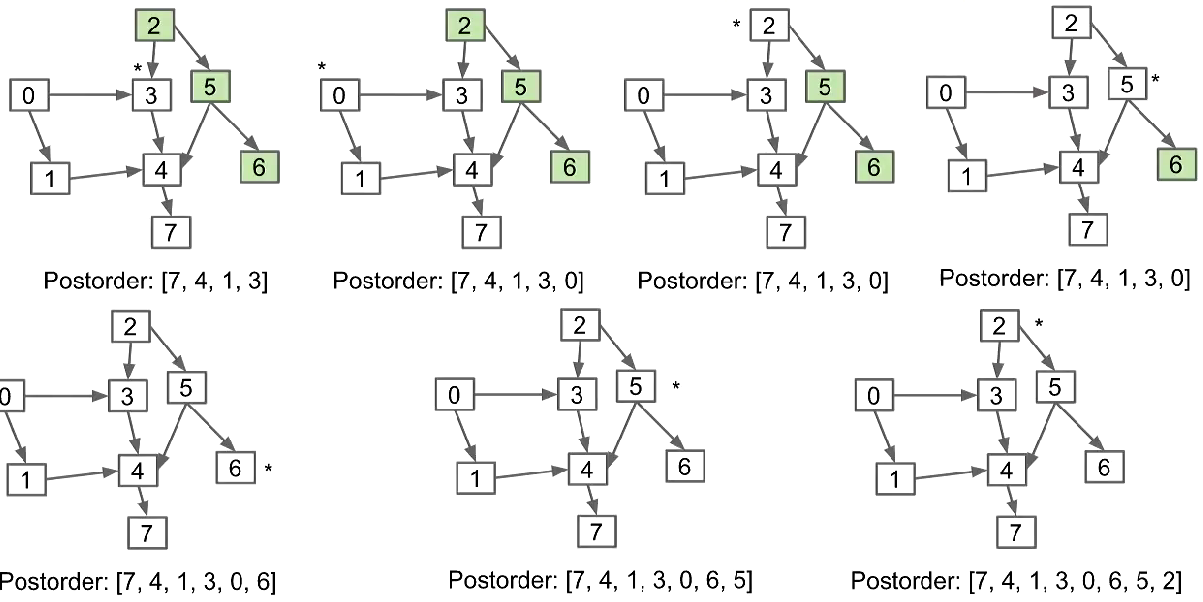
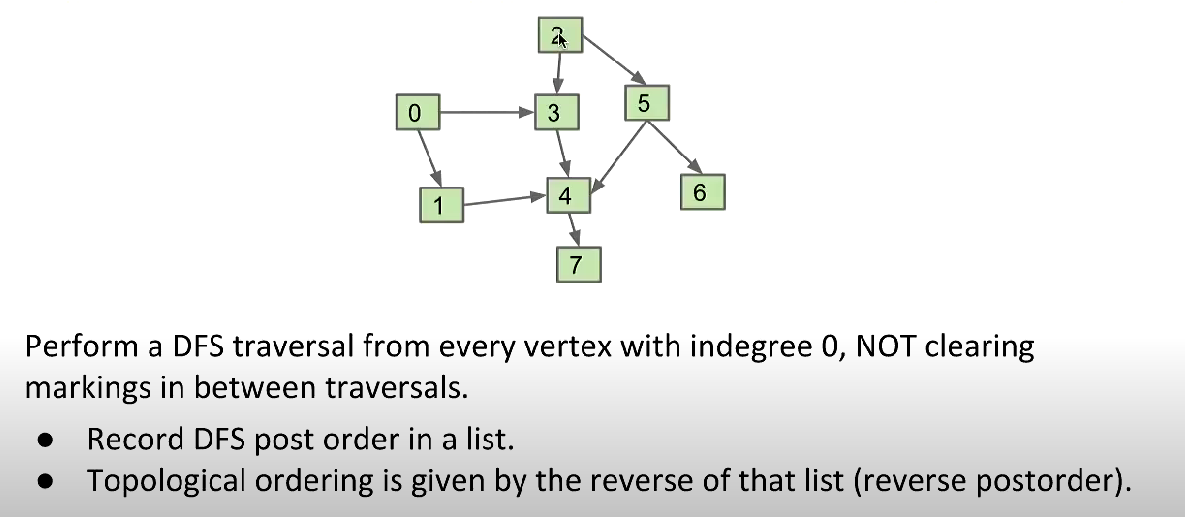 In fact, it’s not a must that start from vertex with indegree 0, it’s OK from any vertex as long as every vertex is visited in the last.
利用 DFS 的「三色标记法」/「递归栈」
我们通常给每个节点维护一个 访问状态,常见的有三种:
- 0 = 未访问(white)
- 1 = 正在访问(在递归栈中)(gray)
- 2 = 已完成访问(black)
具体规则:
- 如果 DFS 到一个未访问的点,就继续递归。
- 如果 DFS 碰到一个「正在访问」的点(即还没回溯完),说明形成了 回边,即有环。
- 如果 DFS 碰到一个「已完成」的点,说明已经拓扑排序过了,直接跳过。
Example:
 方法二:Kahn 算法
4. 初始化:计算所有顶点的入度,将入度为 0 的顶点加入队列(作为起点)。
5. 迭代:从队列中取出一个入度为 0 的顶点,将其加入排序结果;然后减少其所有邻接顶点的入度,若邻接顶点入度变为 0,则加入队列。
6. 重复步骤 2,直至所有顶点被处理(若图中存在环,则无法完成排序)。
方法二:Kahn 算法
4. 初始化:计算所有顶点的入度,将入度为 0 的顶点加入队列(作为起点)。
5. 迭代:从队列中取出一个入度为 0 的顶点,将其加入排序结果;然后减少其所有邻接顶点的入度,若邻接顶点入度变为 0,则加入队列。
6. 重复步骤 2,直至所有顶点被处理(若图中存在环,则无法完成排序)。
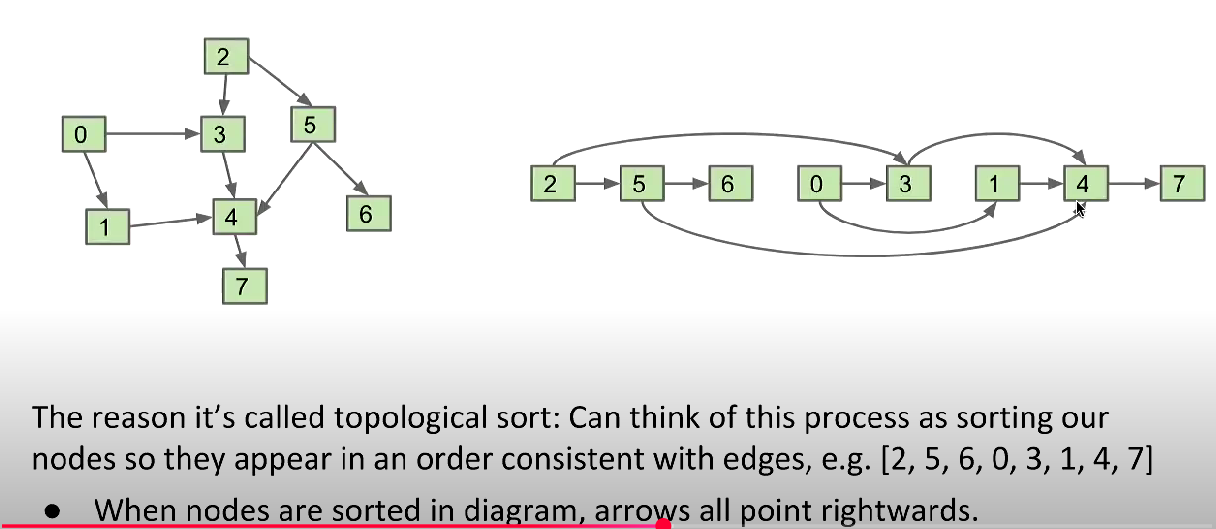 Not a ordering sort like quick sort.
Implementation
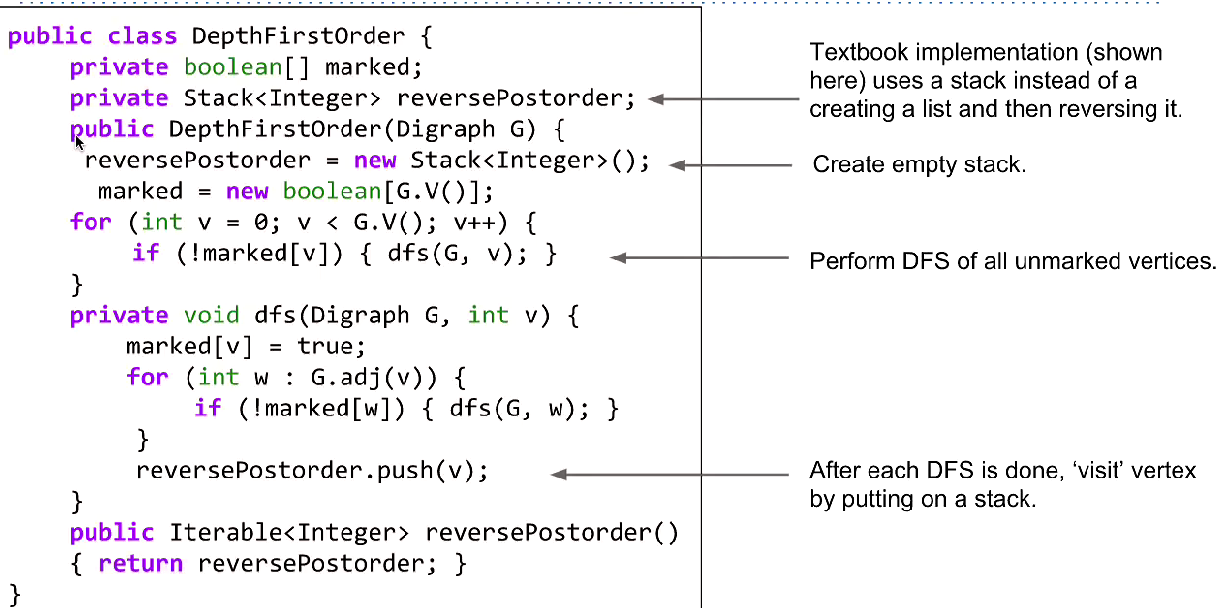
Comparison
Breadth-First
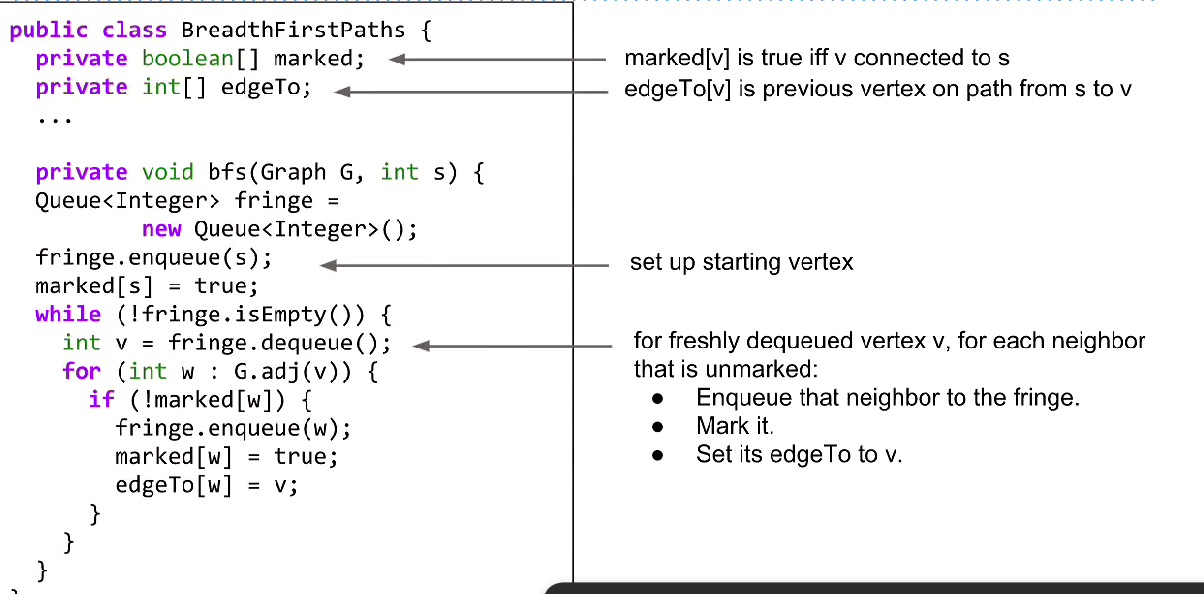
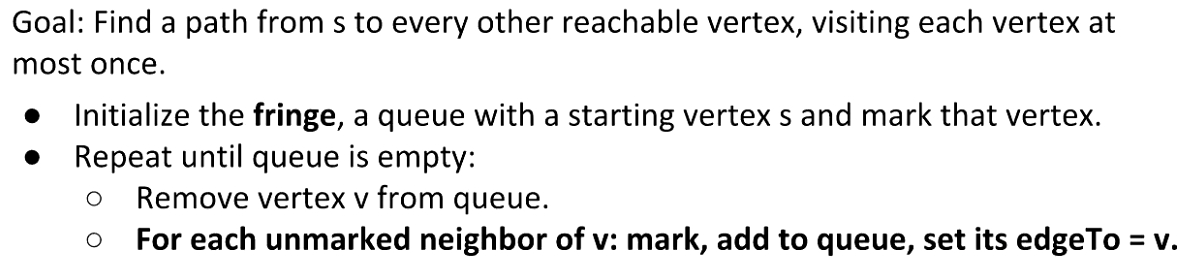 Handy for finding shortest paths.
Implementation
The Shortest Path
We will get a tree which contains the shortest way to every reachable vertex from source.
The Dijkstra Algorithm
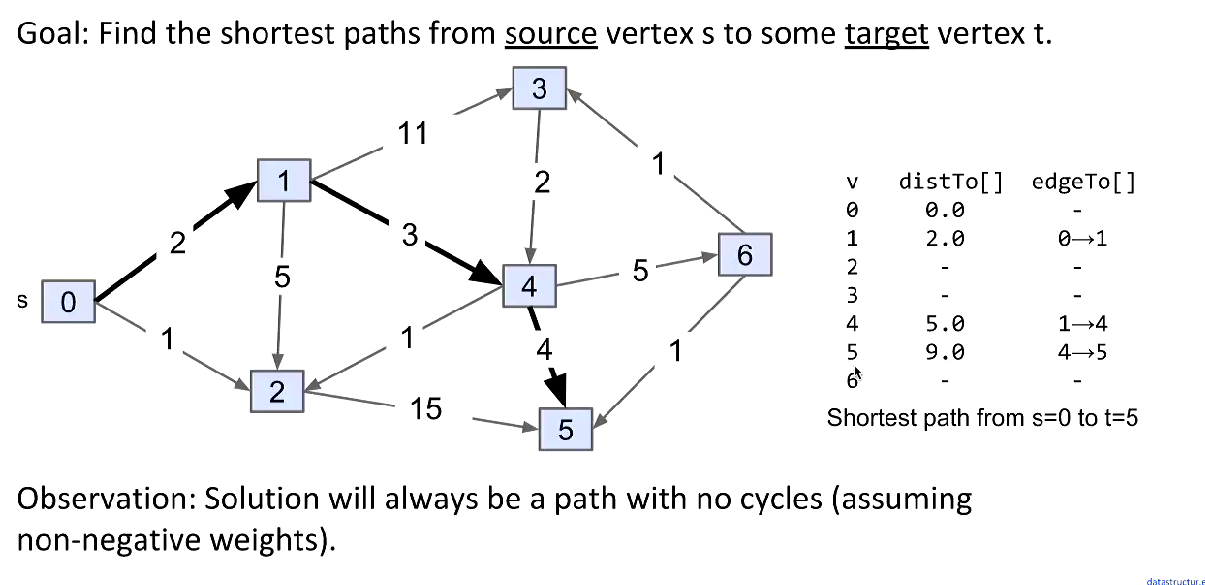 If there’s a graph with V vertices and w edges and every vertex is reachable, there will be V-1 edges in the shortest path tree.
Implementation
Relaxation:
Use it if better.
松弛操作指的是:对于图中的一条边 (u, v)(从节点u到节点v),如果当前已知从起点到v的距离,大于 “从起点到u的距离 + 边(u, v)的权重”,则更新 “起点到v的距离” 为后者。
简单说,就是检查是否能通过中转节点u,找到一条到v的更短路径,如果可以就更新路径长度。
例如:
- 假设当前起点到
v的距离是 10, - 起点到
u的距离是 3,边u→v的权重是 5, - 那么通过
u到v的总距离是 3+5=8,小于 10,此时就 “松弛” 这条路径,将起点到v的距离更新为 8。
Best-First
Visit vertices in order of best-known distance from source, relaxing each edge from the visited vertex.
If a node is selected by best-first and added in the result array, it will never be changed.
Fringe(PQ)
Maintain a heap(PQ) to find the closest vertex, so that we will not waste our time to search for distTo array.
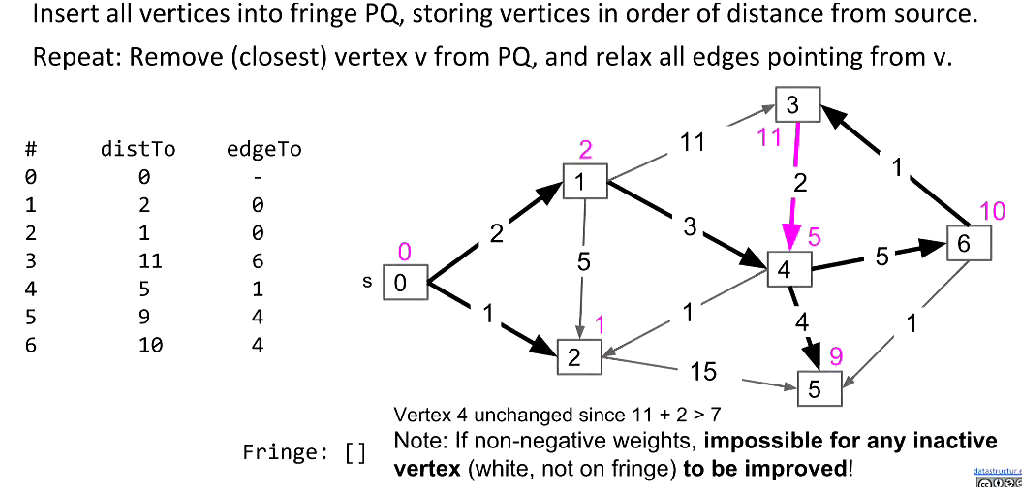
Pseudocode
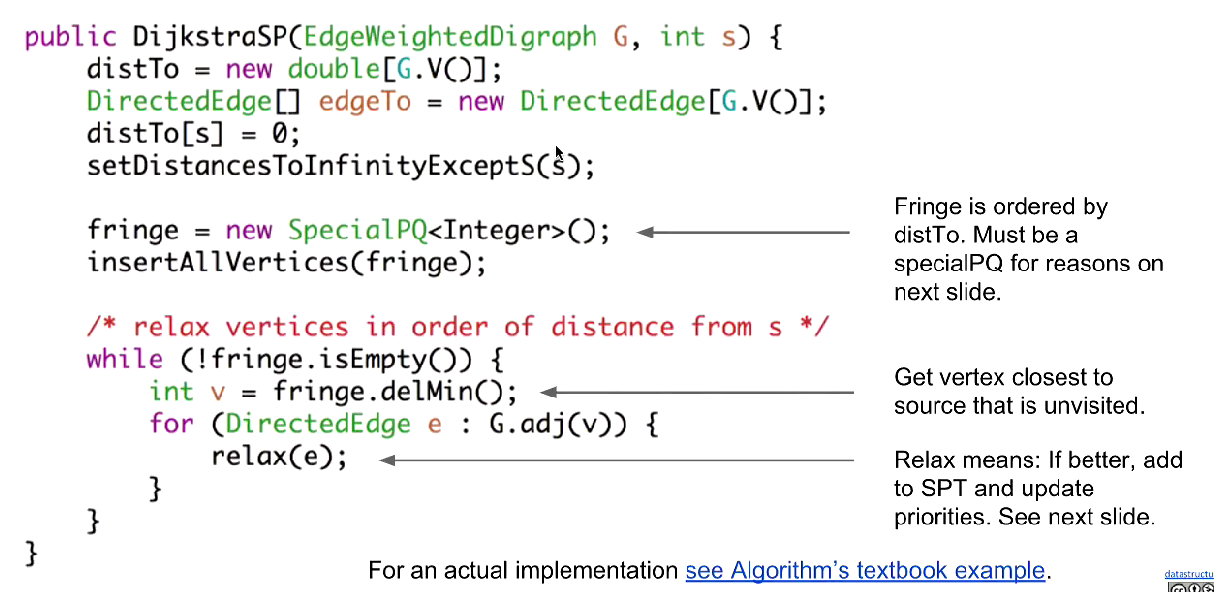
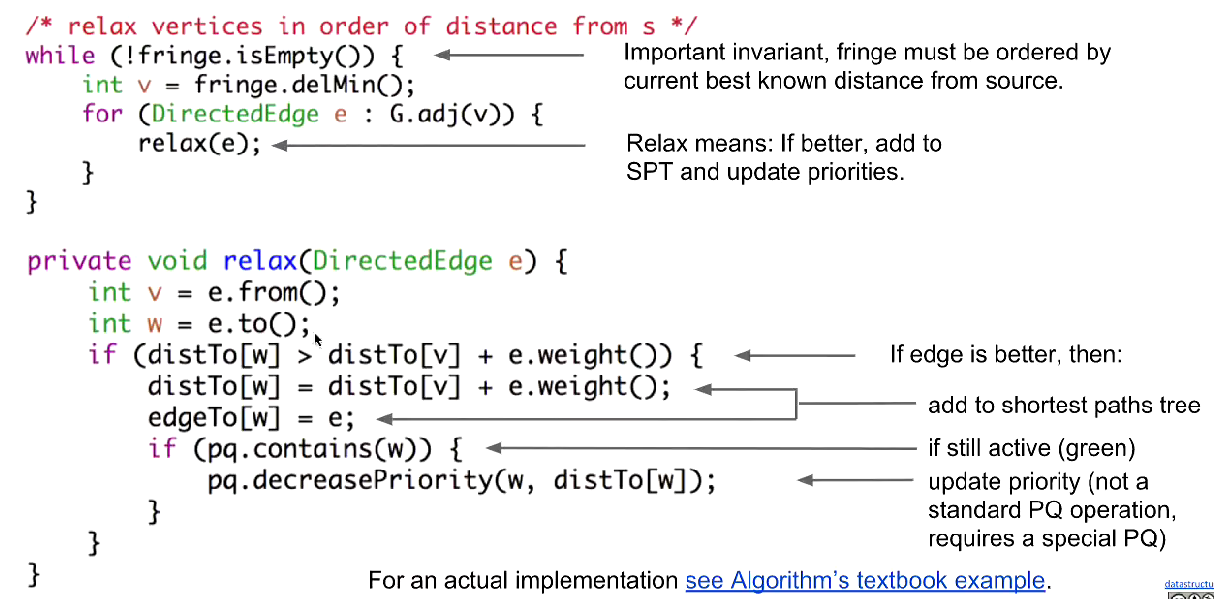 (pq is fringe)
Runtime
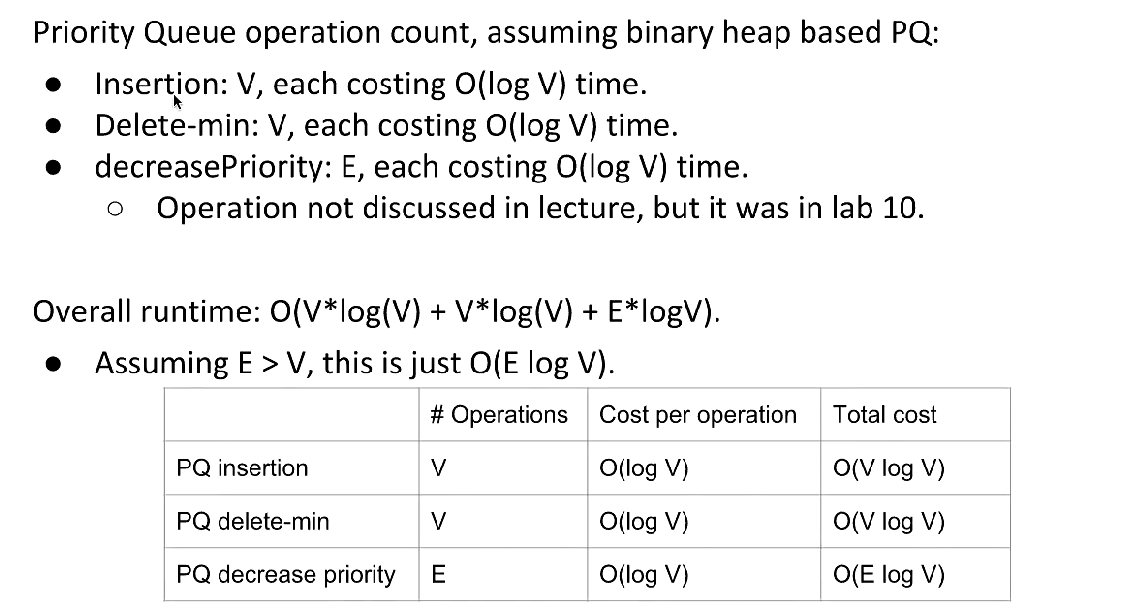
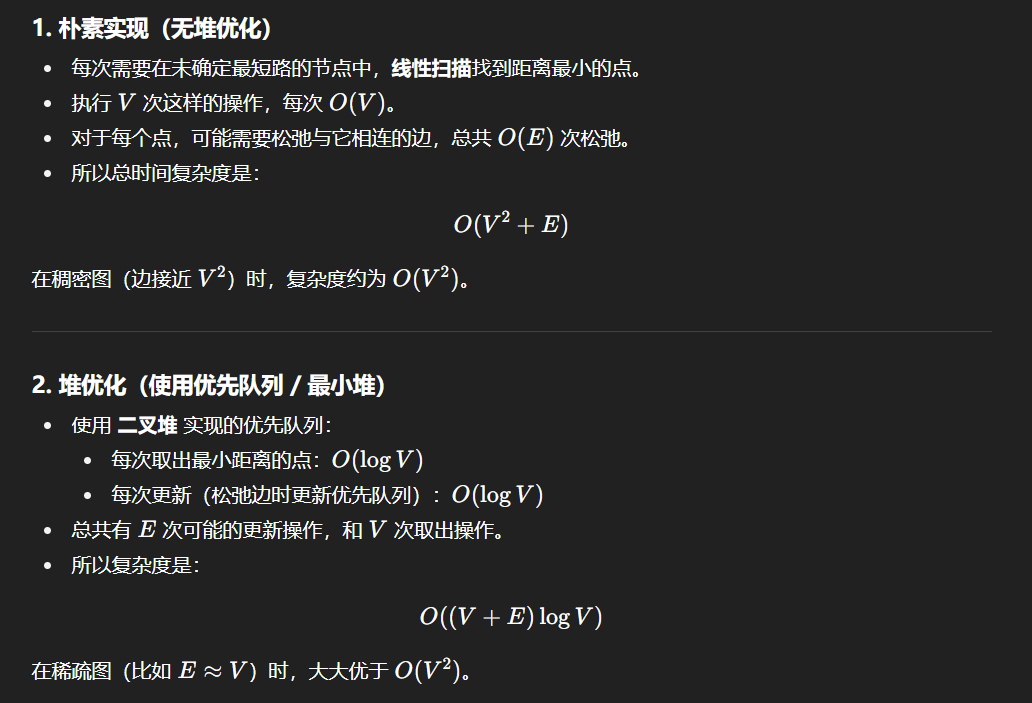 也就是说,对于松弛操作,由于更改距离后要维护堆,堆优化的时间从E变成了Elog(V),因此对于稠密图,松弛次数多,会浪费时间。
Navigation(A*)
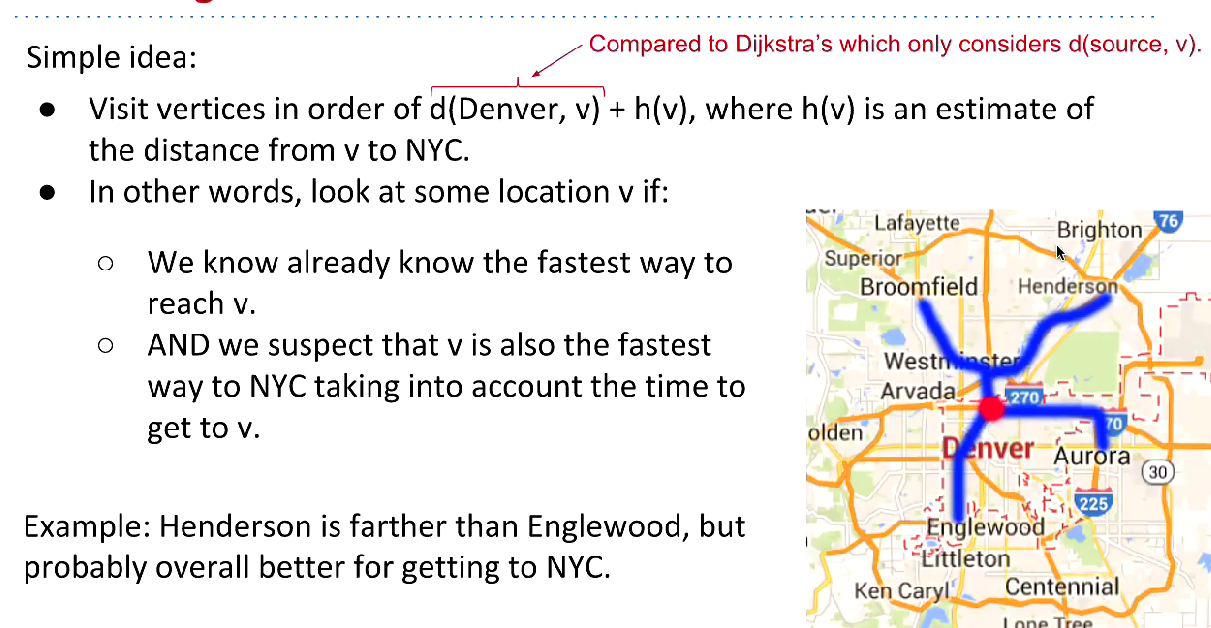
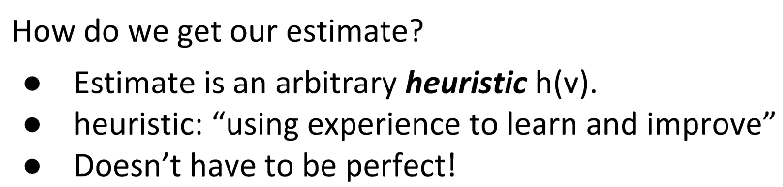 In this example, we can use the straight distance between two city as
 h.
It does not change the algorithm but use h + distTo instead of only dist.
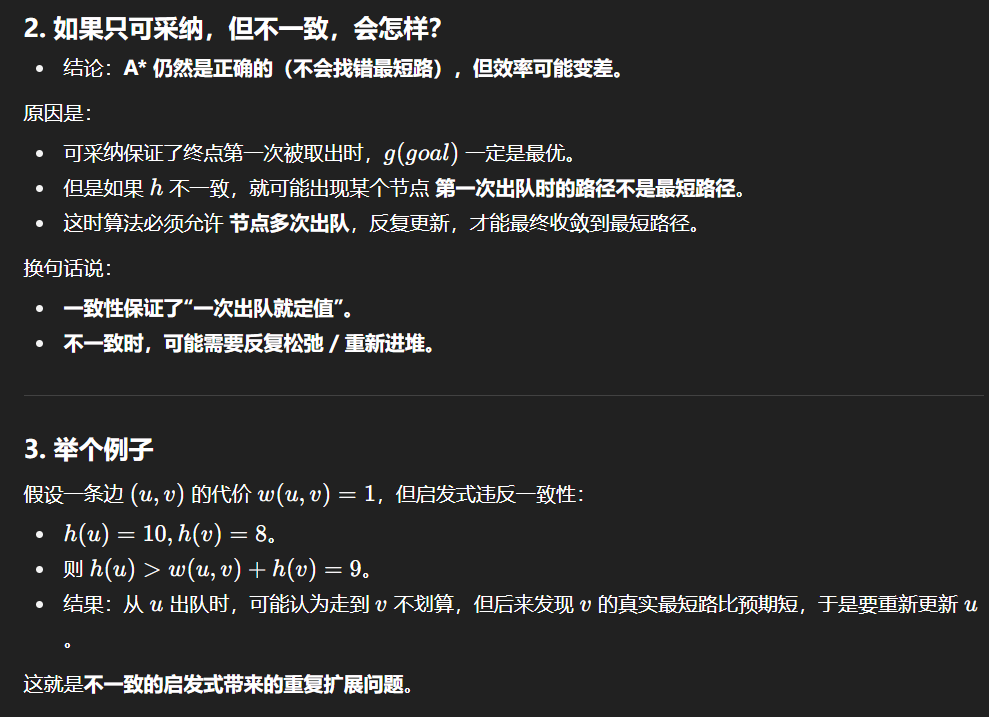
Wrong heuristic will lead to wrong path.
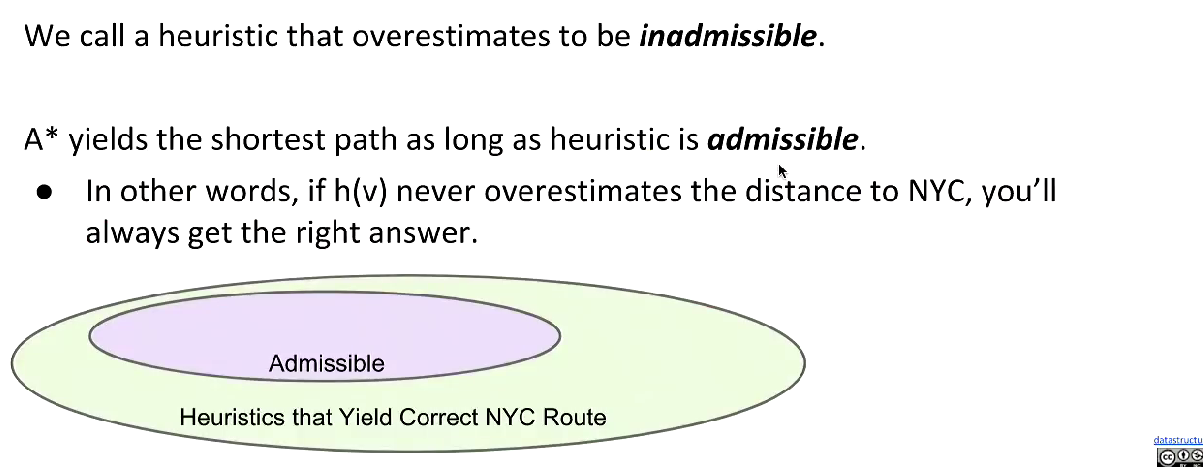 So we should set
 h(v) <= actual distance from v to destination

The Minimum Spanning Trees
Cycle:
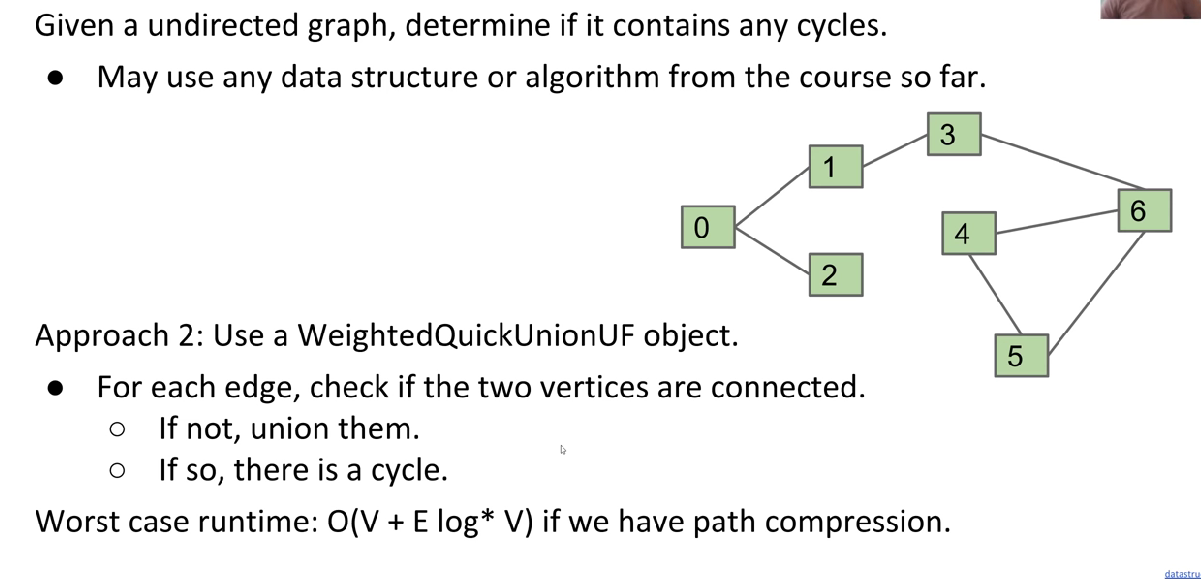 See in Kruskal
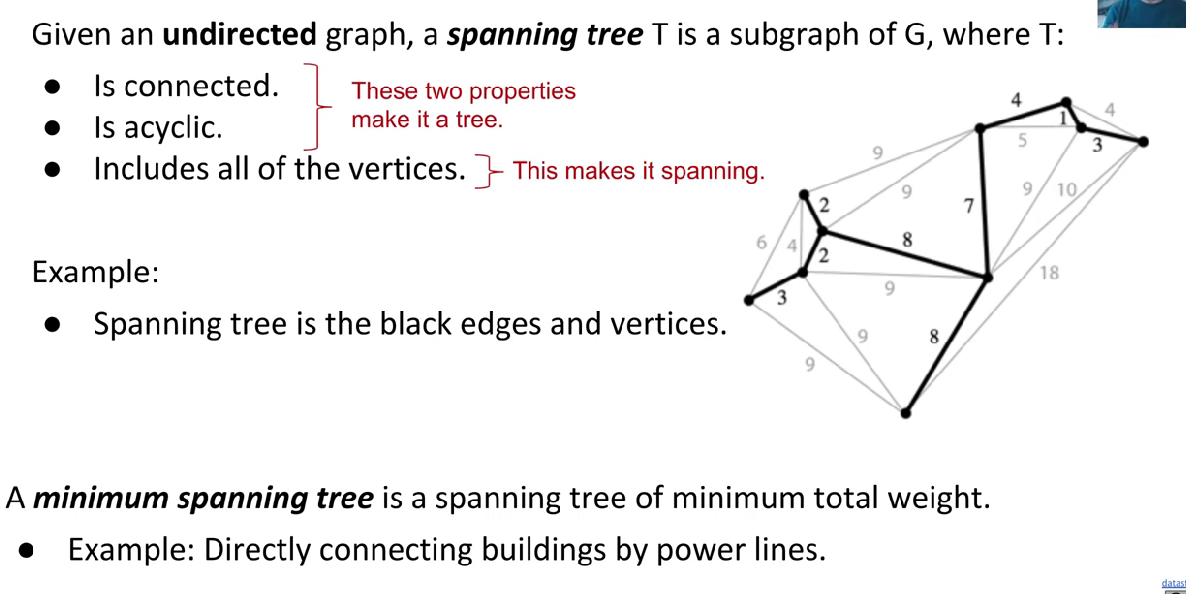
Definition
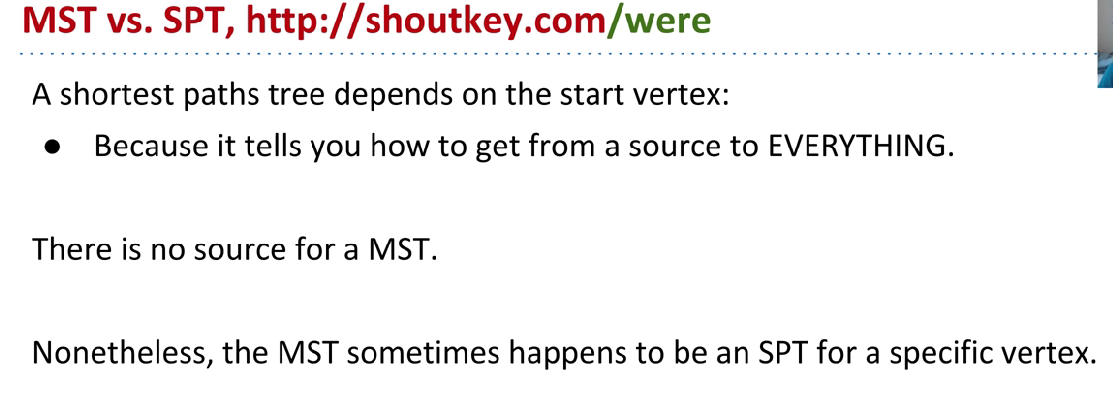
MST VS SPT
Implementation
Prim’s Algorithm
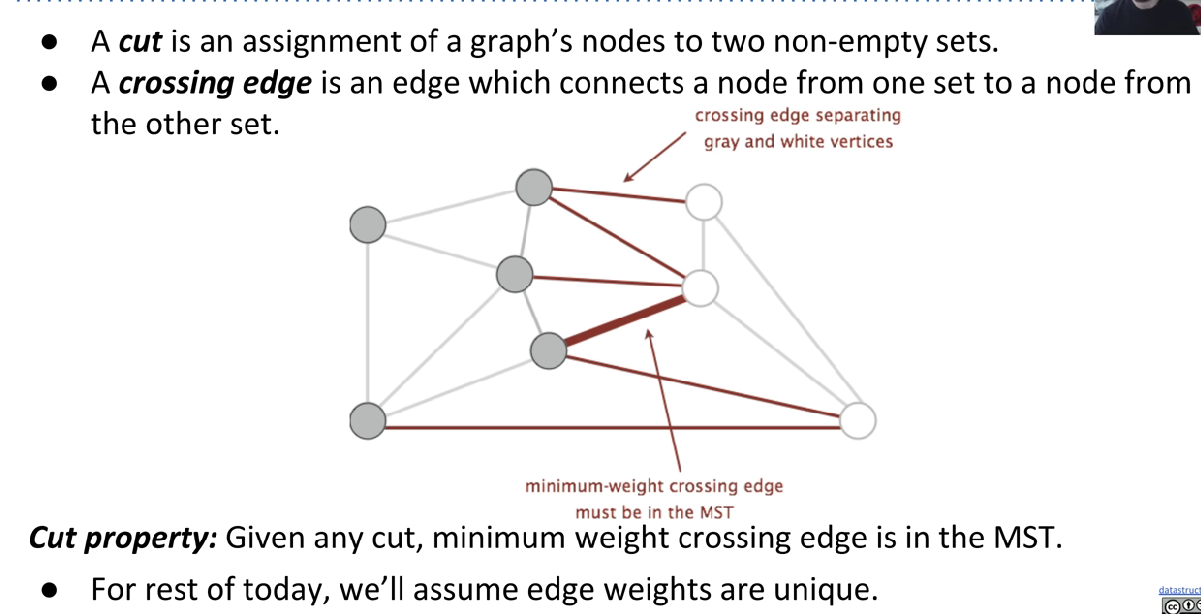
Cut Property
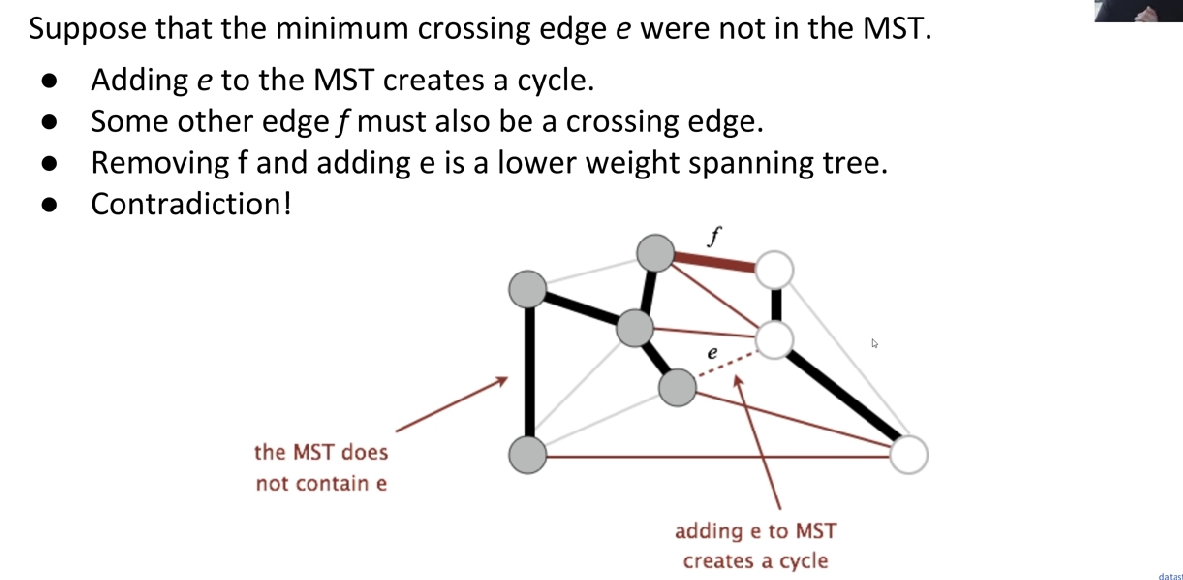
 Proof:
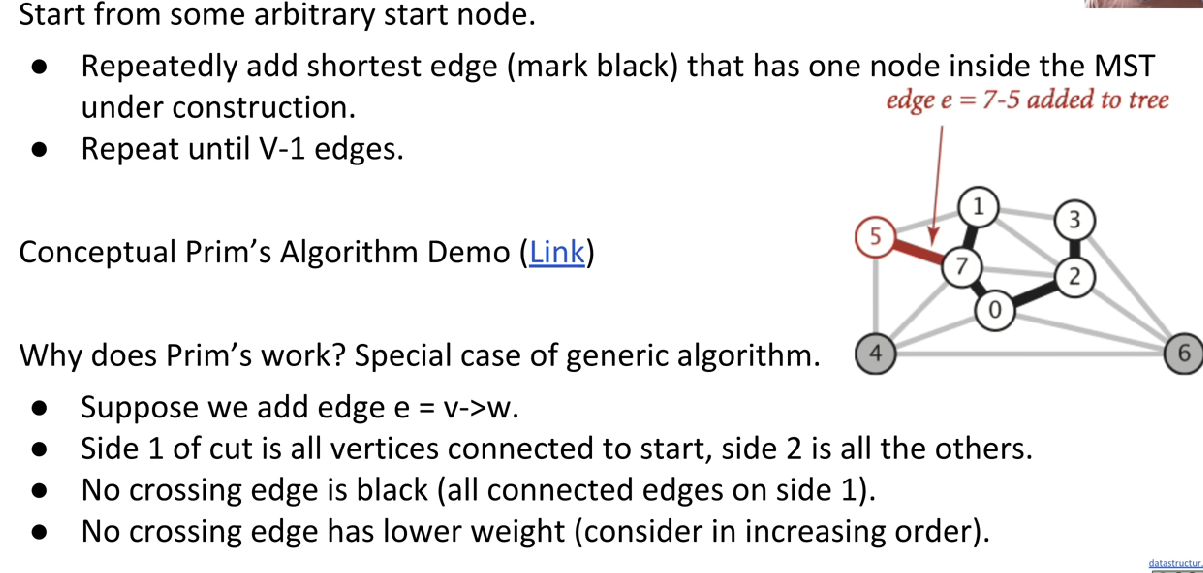 (According to cut property, if there’s cross edges with same weight, at least one in the MST, and maybe MST is not unique.)
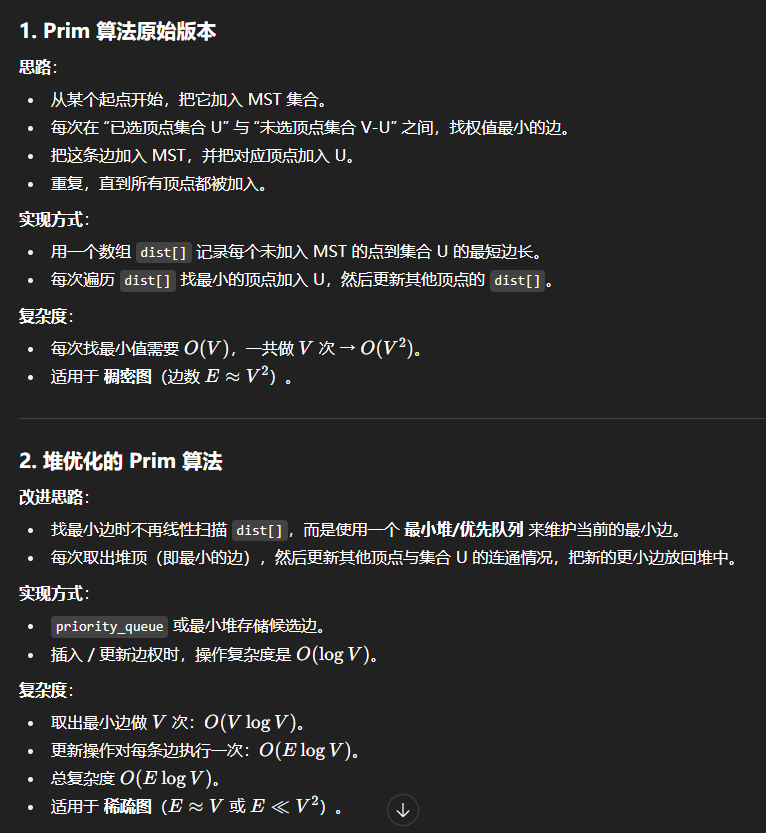
Improvement: PQ
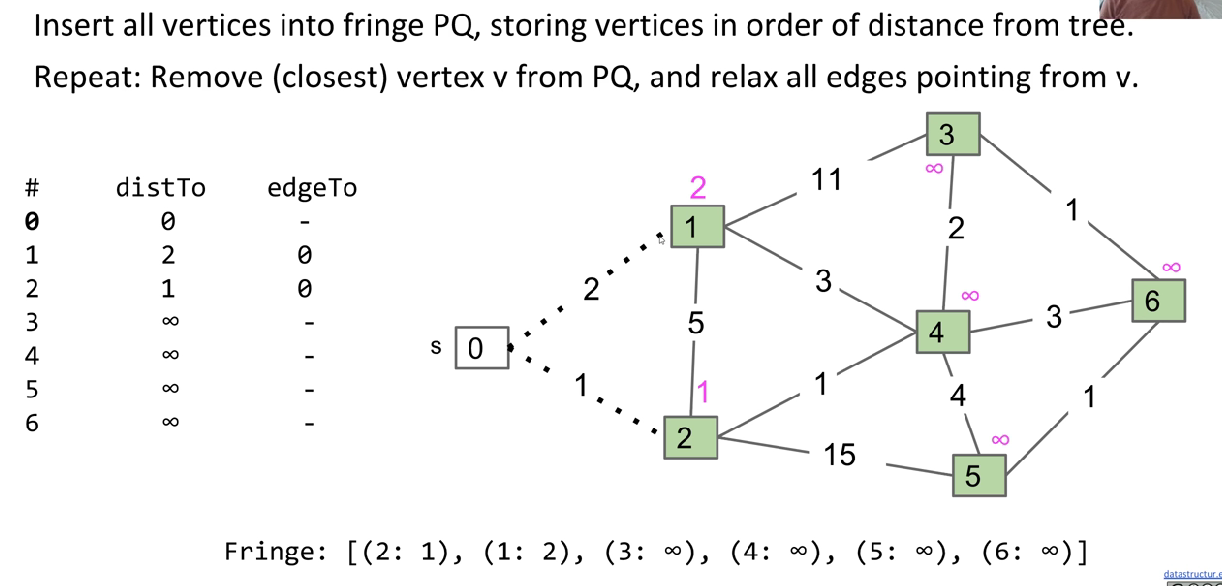
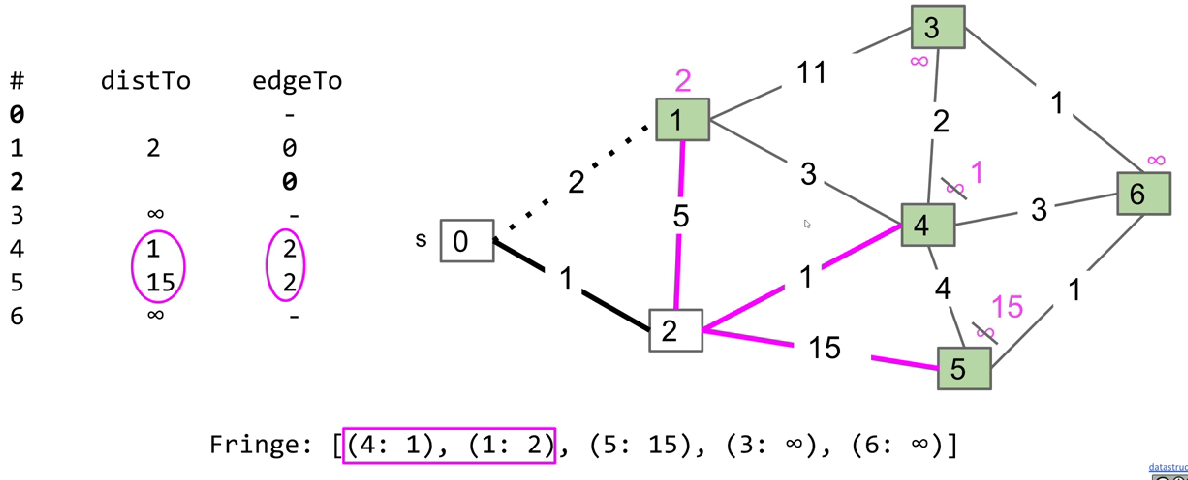
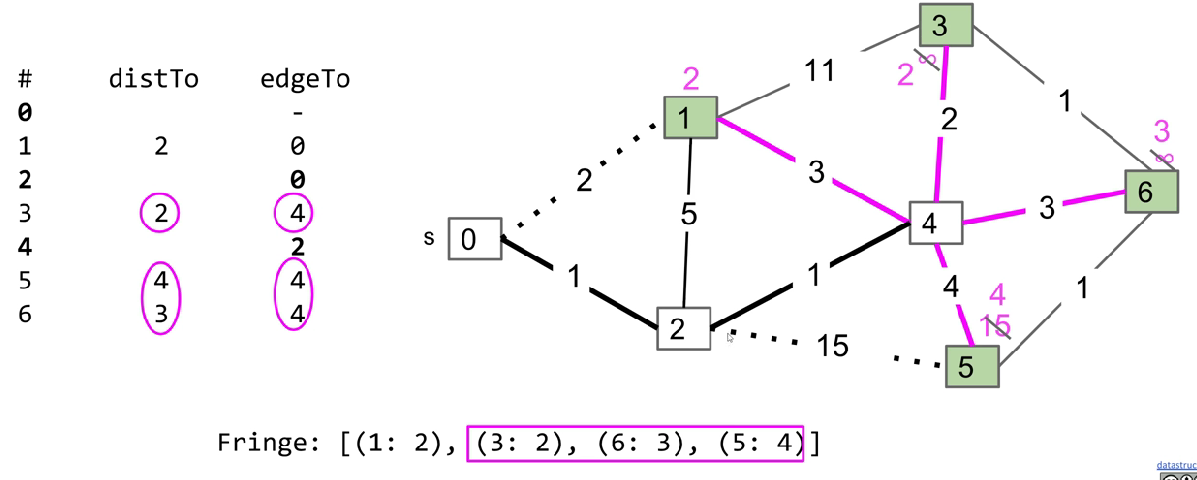
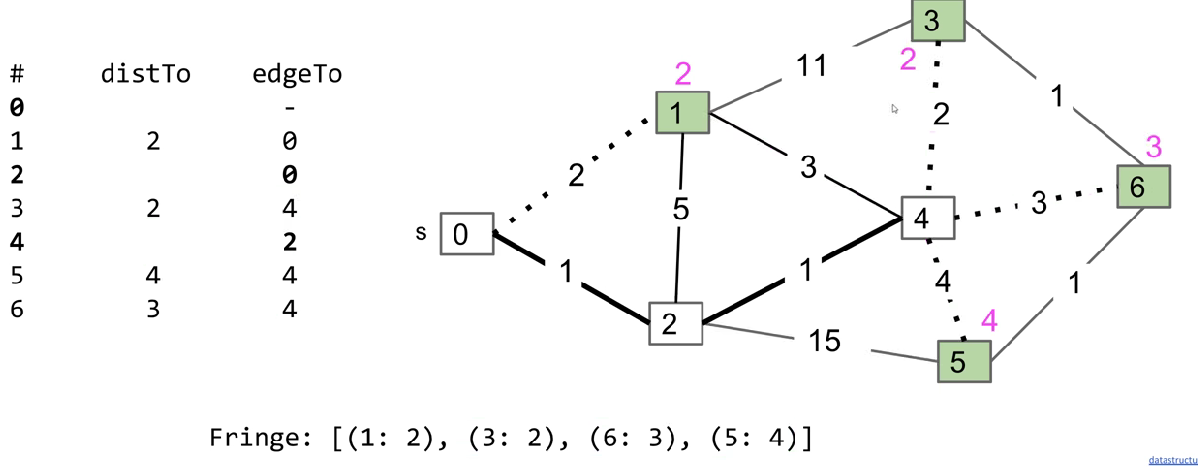
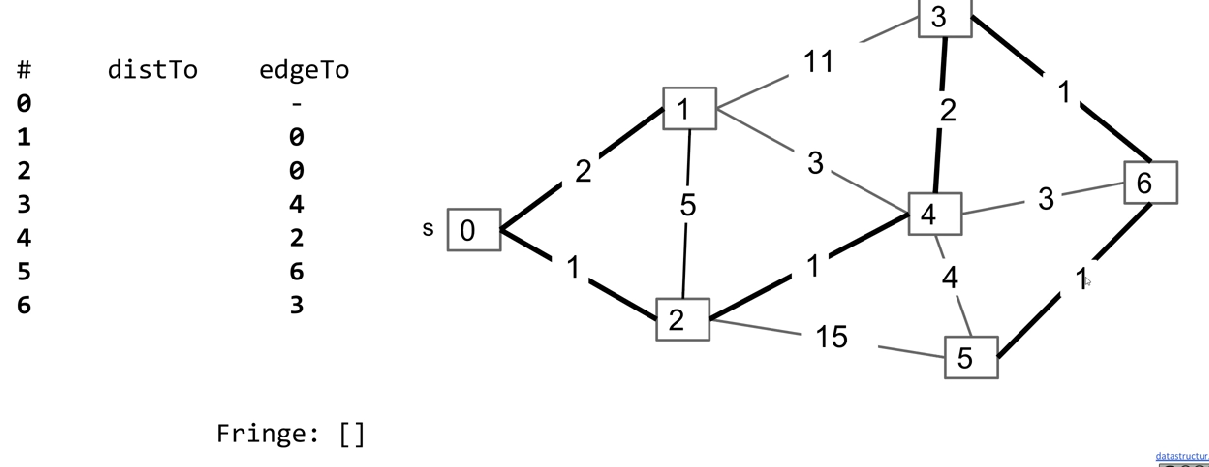 So that we can consider less edges possible to be added.
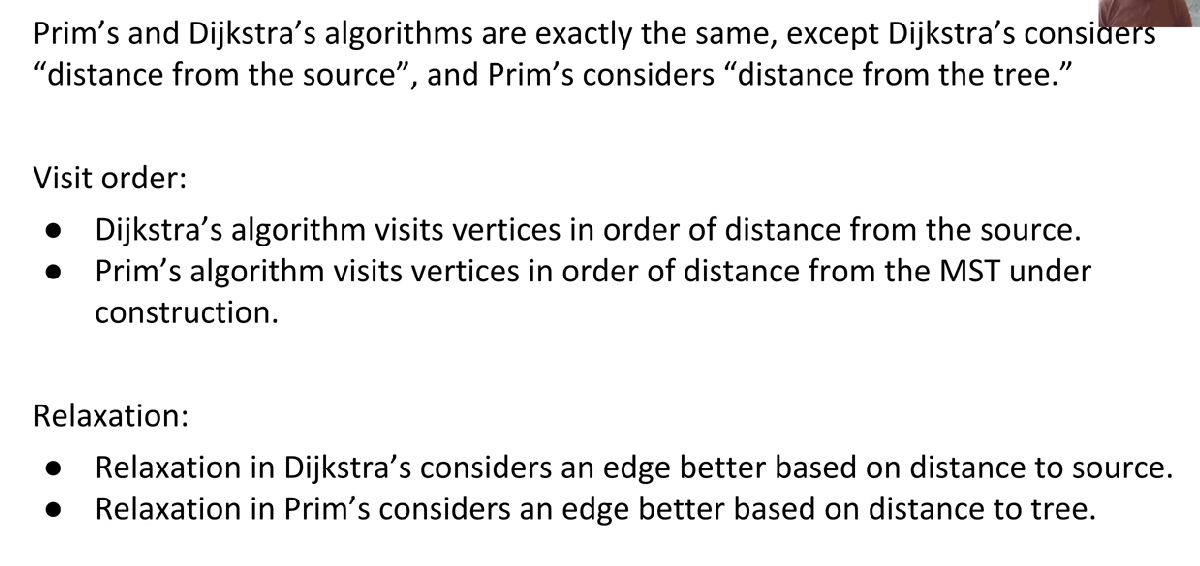
Comparison:

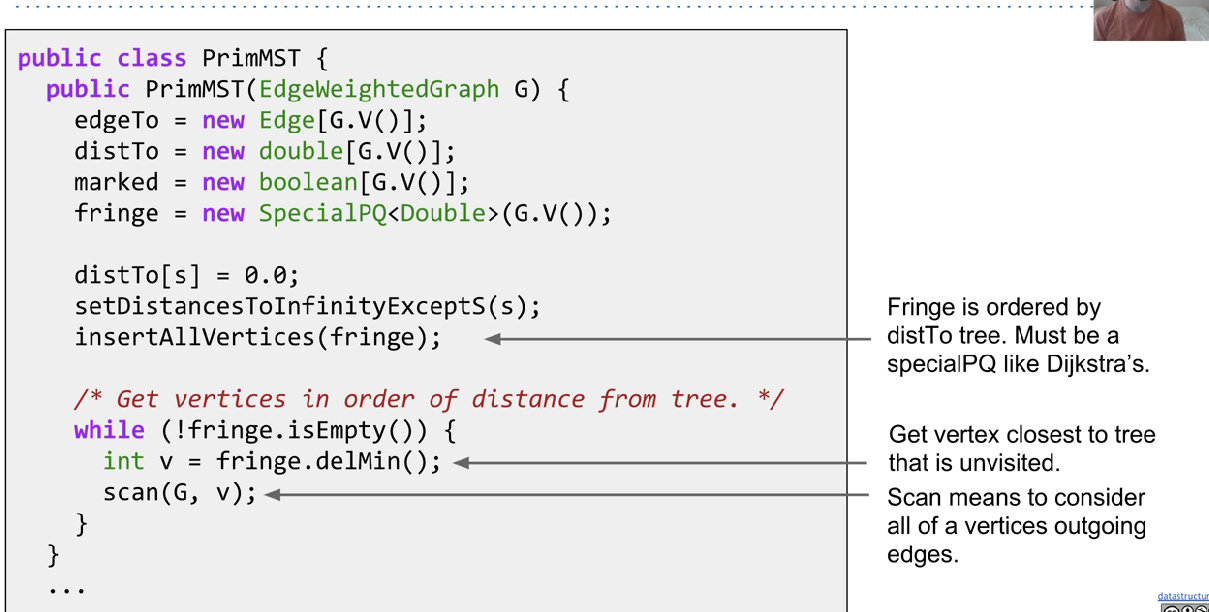
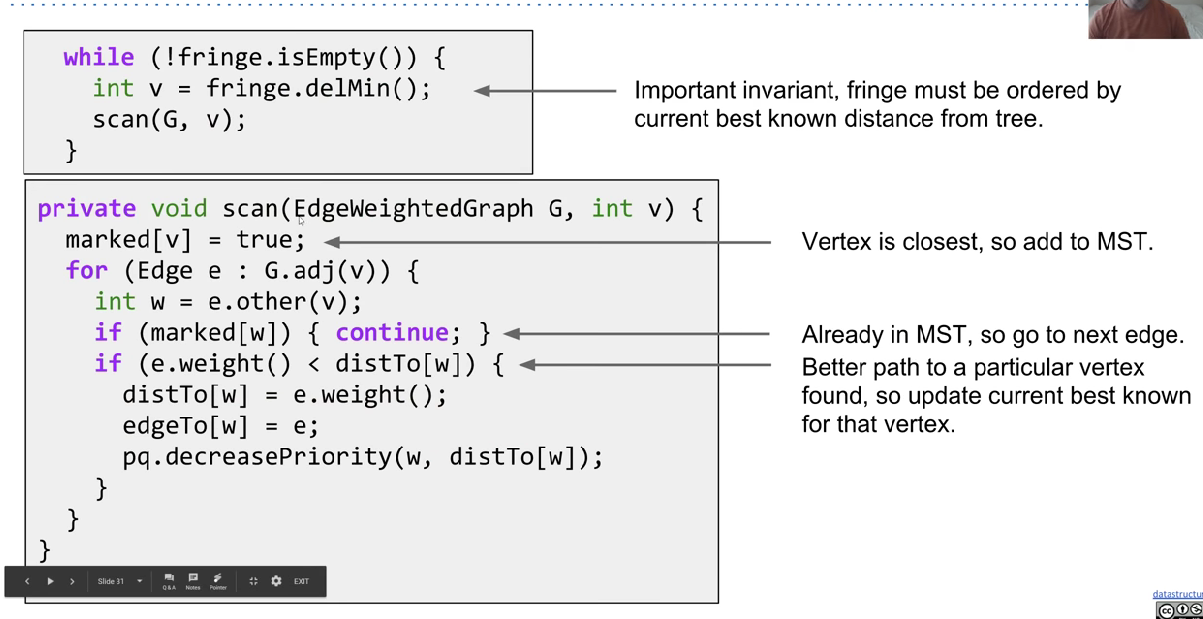
Pseudocode
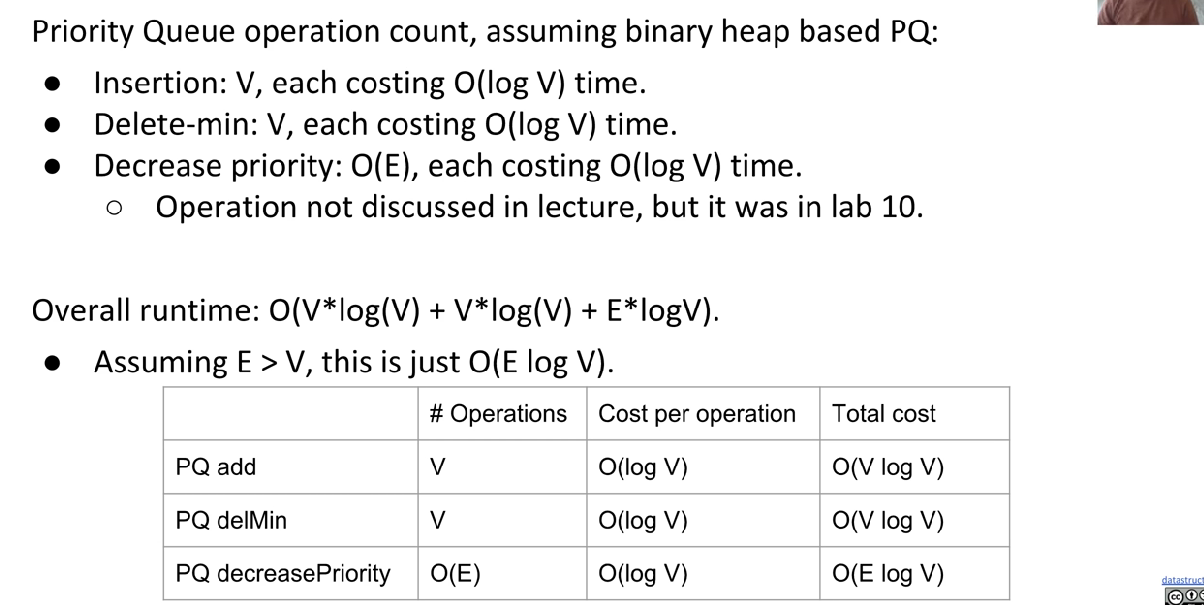
Runtime
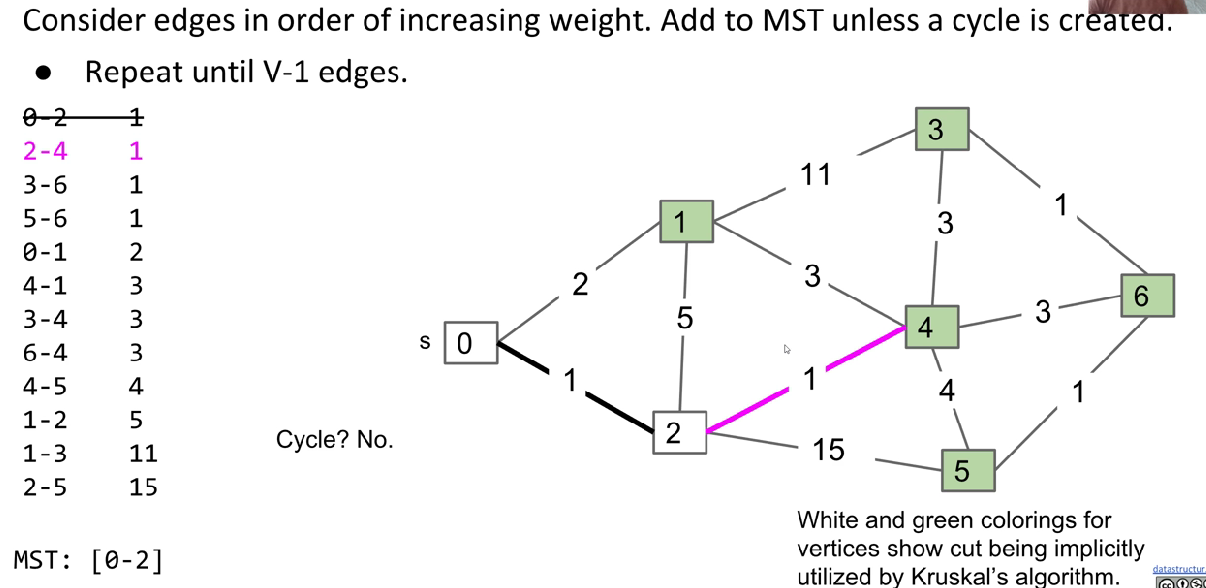
Kruskal’s Algorithm
 Data structure: PQ, WQU
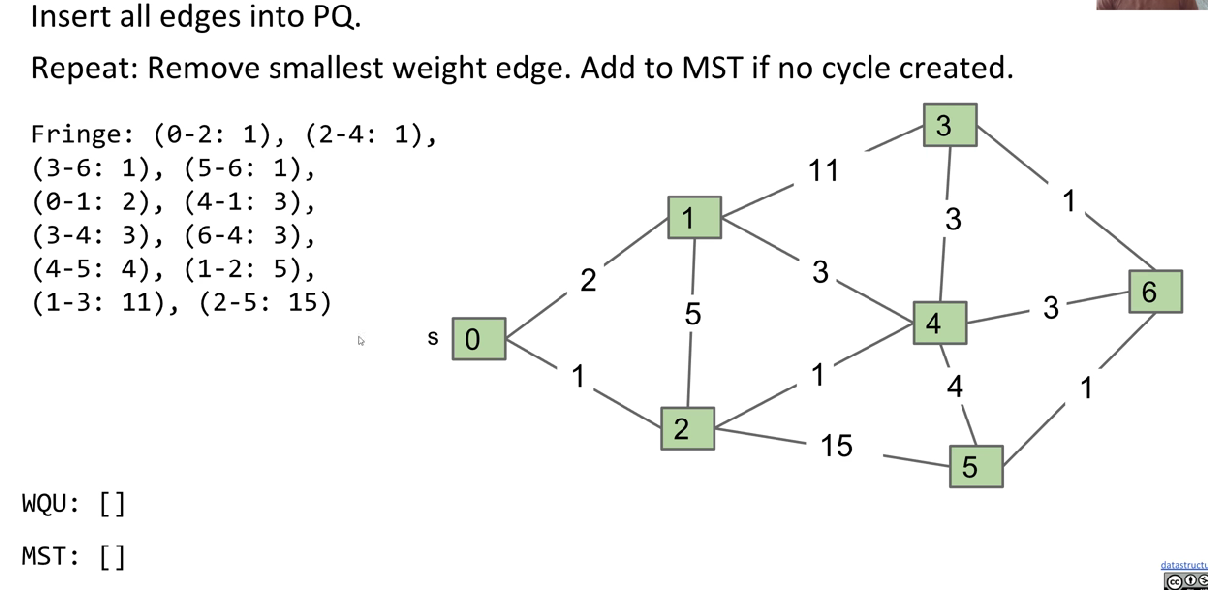
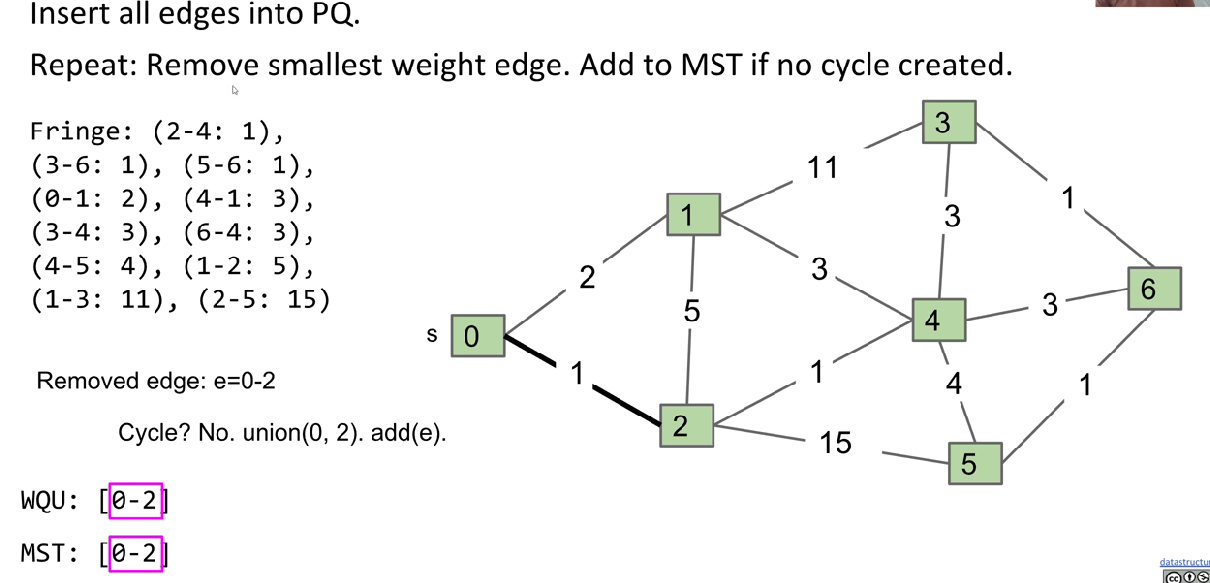
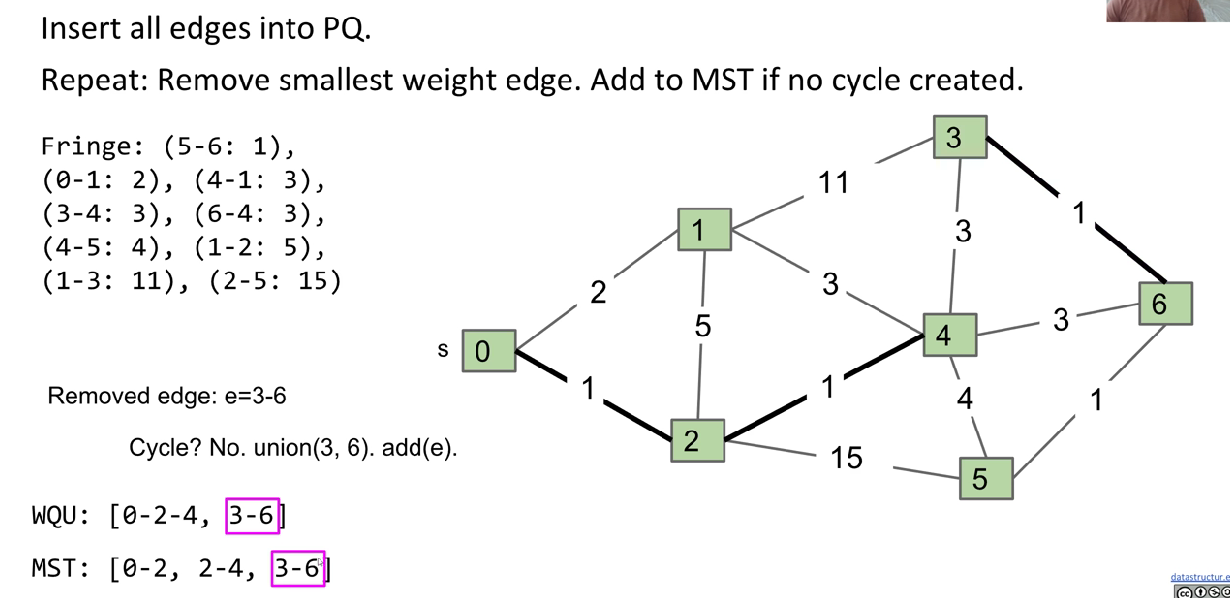
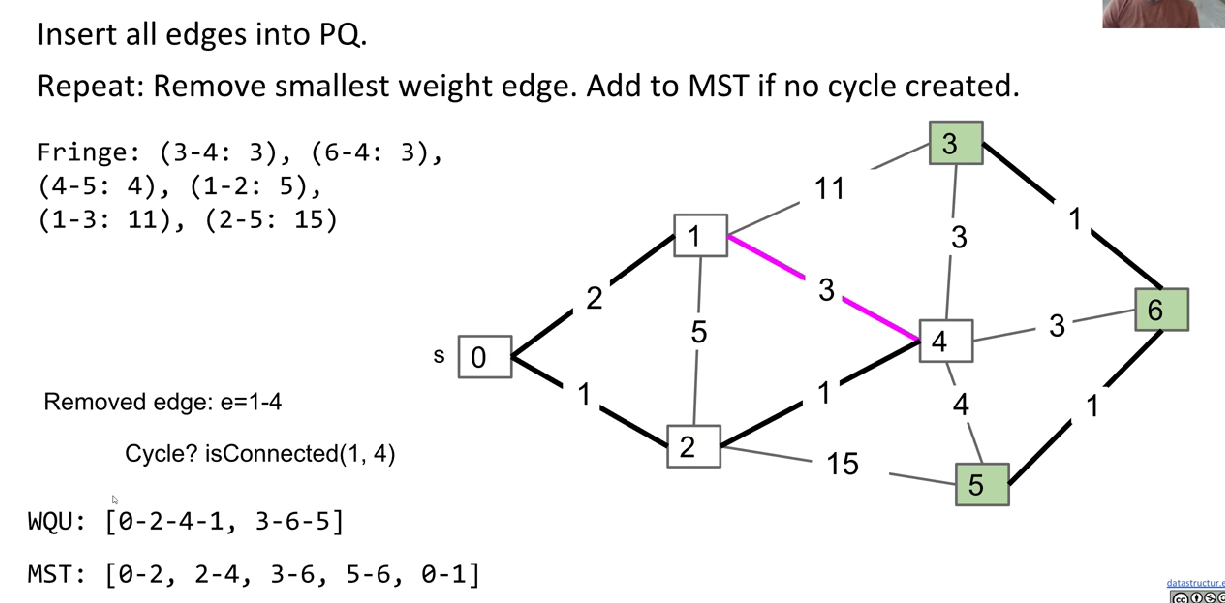
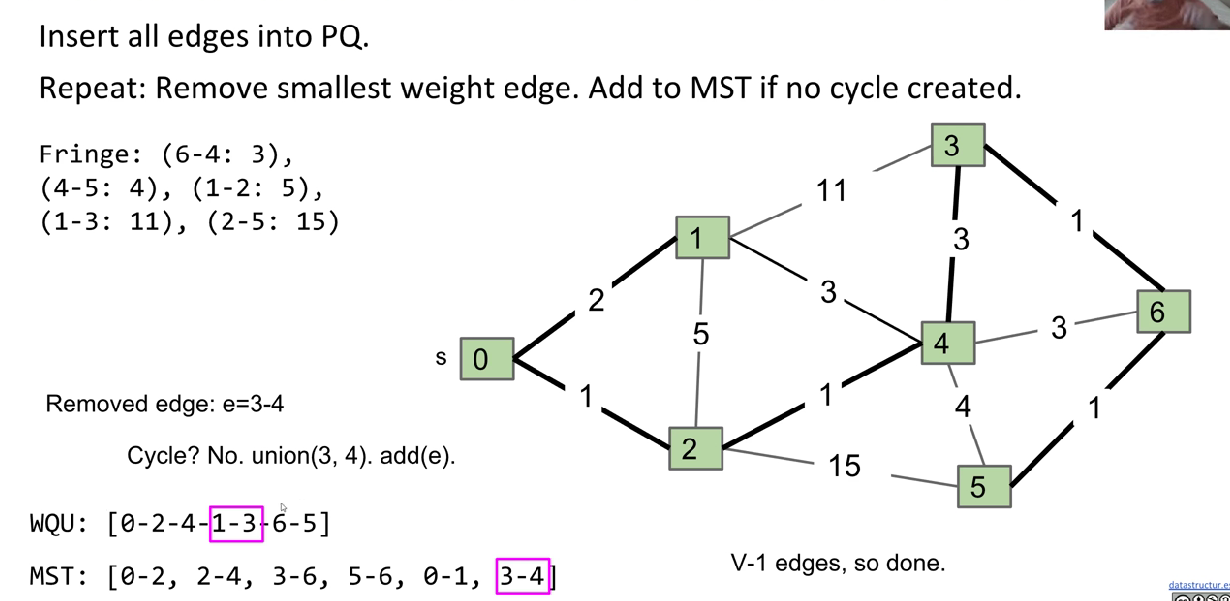
Principle:
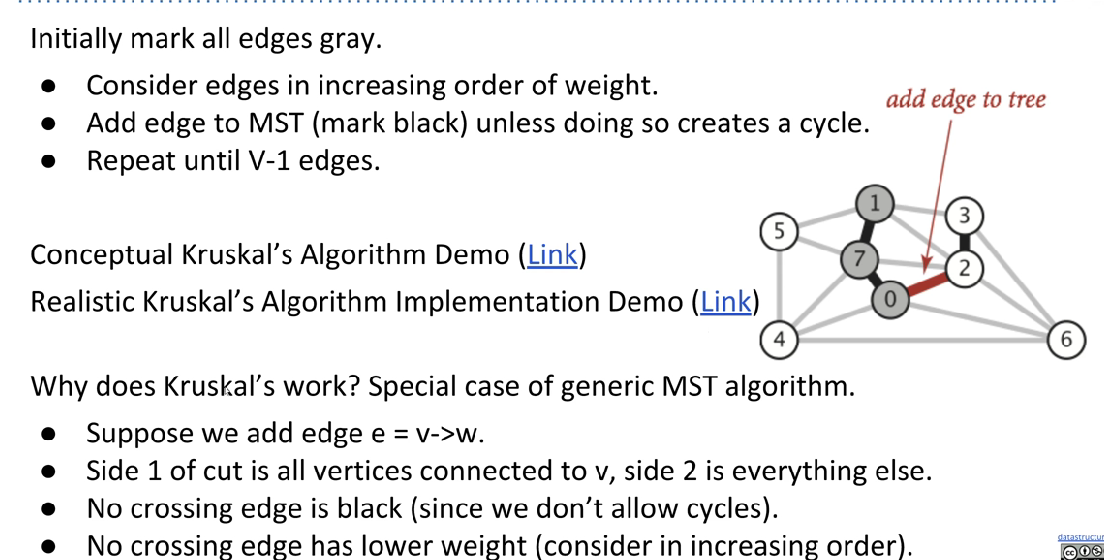
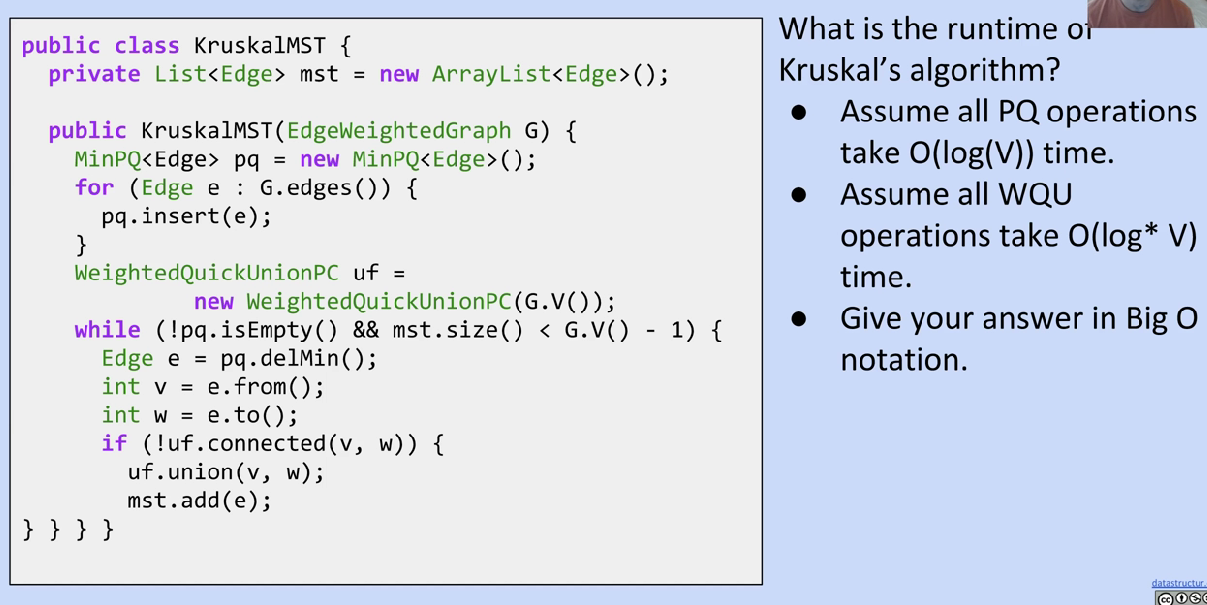
Pseudocode
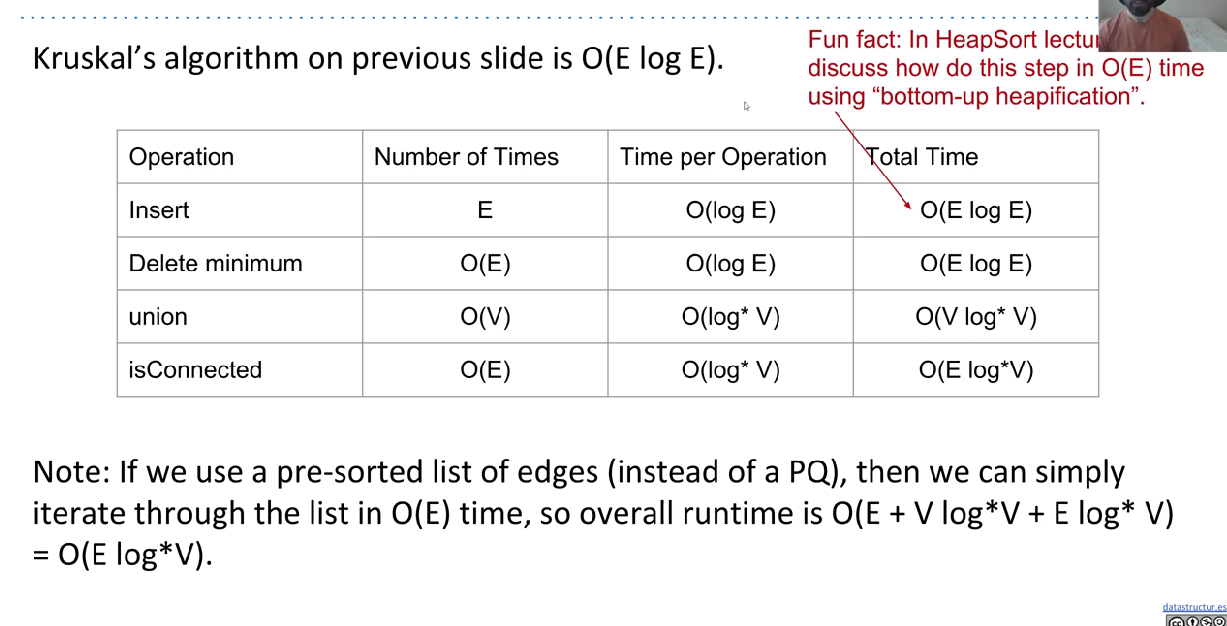
Runtime
Summary