Throw Exception
Syntax:
throw new IllegalArgumentException(String: "Exception message");Create new object of type Exception.
So exceptions are instance of classes.
Catch Exception
Thrown exceptions cause code to crash, but catch exceptions instead, preventing program from crashing.
Syntax:
try {
    doSomething();
} catch(Exception e) {
    doSomethingElse();
}
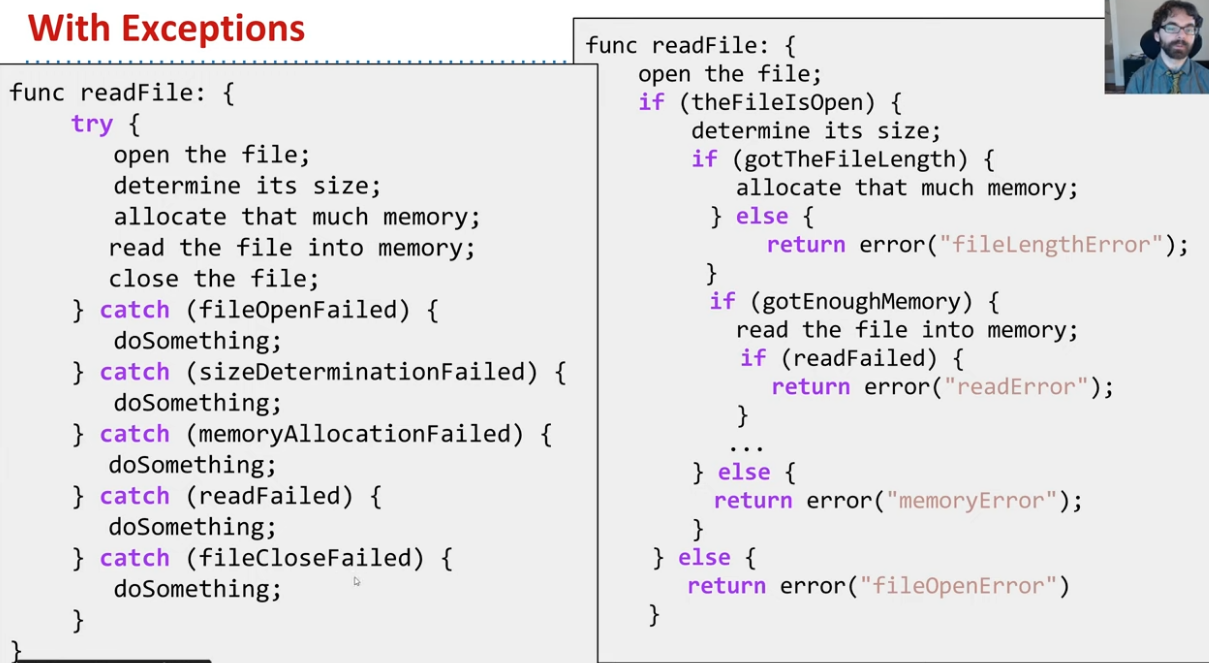
The Philosophy of Exceptions
Allows us to keep error handling code separate from ‘real’ code.
Exceptions and the Call Stack
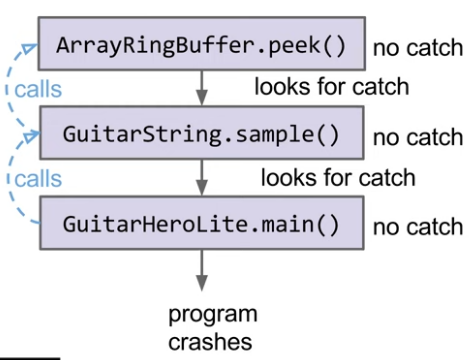
When an exception is thrown, it descends the call stack.
If exceptions reach the bottom of the stack, the program will crash and Java provides a message of call stack for the user.
Checked Exceptions
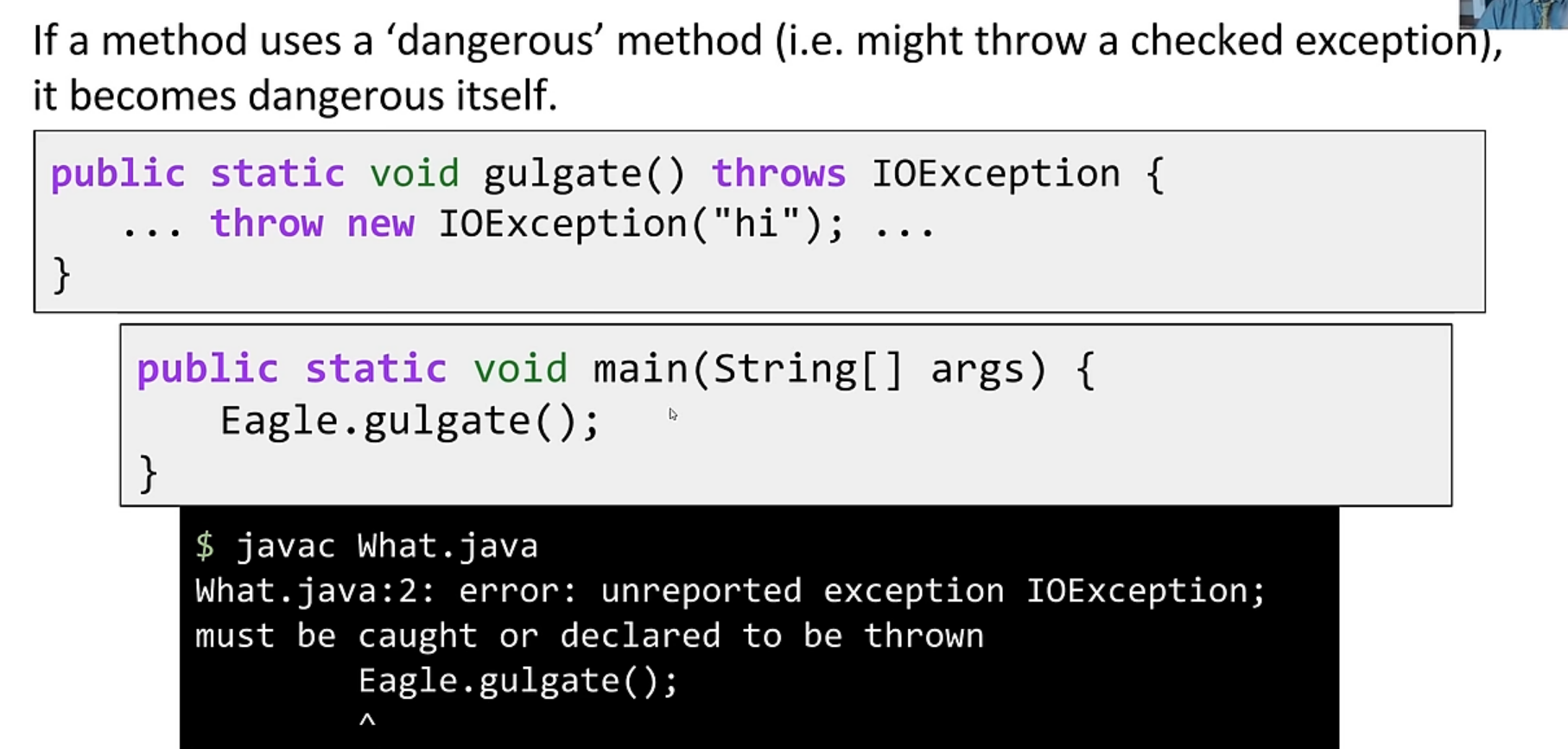
When compiling, compile may yell: “must be caught or declared to be thrown”, these are exceptions disgusting by the compiler that we MUST handle them somehow.
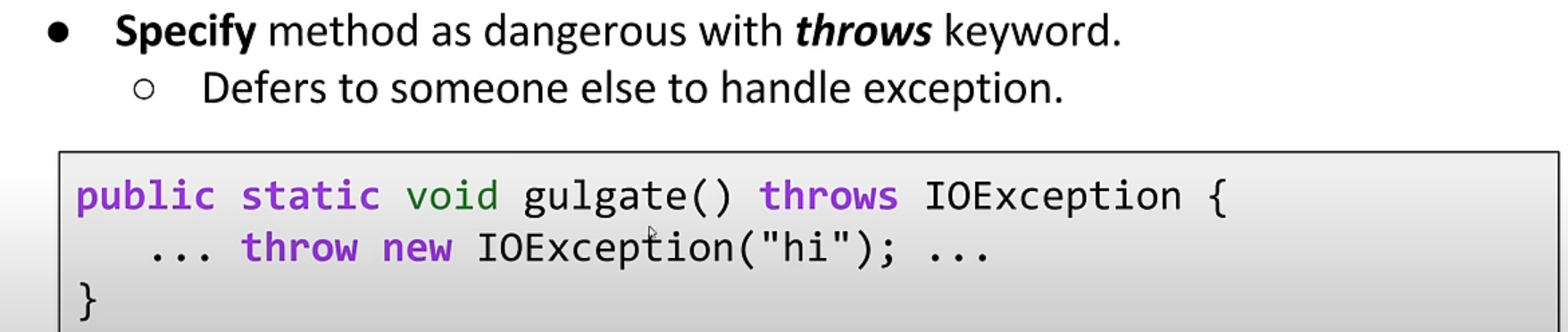
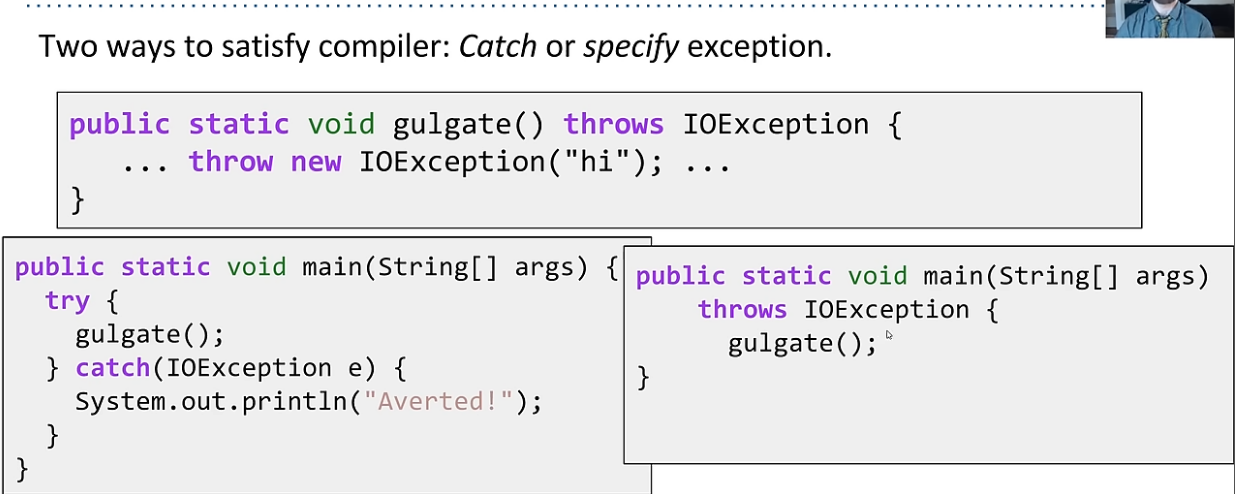
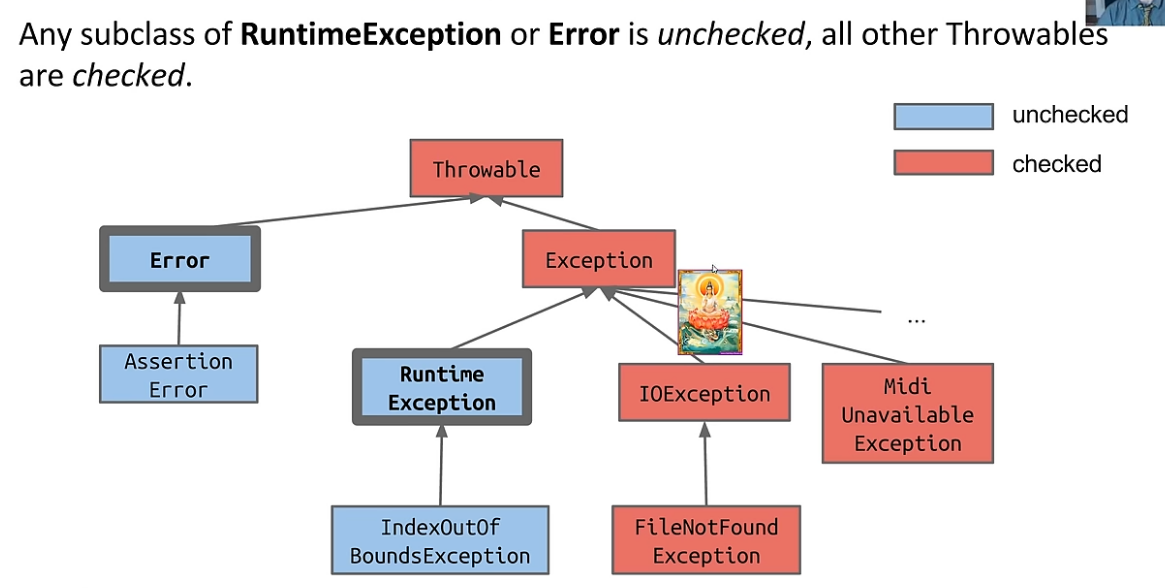 If any checked exception may occur, we must
 catch or specify these exceptions, or program will not be compiled.
catch: We handle the problem.specify(throws): We ask others to handle the problem.